
What I Know at 71 That I Couldn’t Have Known at 40: Design, Style, and the Art of Living Beautifully

There is a question I get asked more than almost any other, in various forms and from women at various stages of life, and it goes something like this: how do you make it all look so effortless? The honest answer is that it is not effortless at all. It is the result of decades of looking carefully at the world around me, at rooms, at gardens, at the way light falls on a wall in the afternoon, at the way a well-cut blazer changes how a woman carries herself. It is the result of years spent as a residential interior designer, learning to listen to what a space needed before I touched a thing. And it is the result of a gradual understanding that the same principles that make a room feel beautiful apply, with surprising consistency to how we dress, how we live, and how we show up every single day. Let’s chat about What I Know at 71 That I Couldn’t Have Known at 40: Design, Style, and the Art of Living Beautifully.
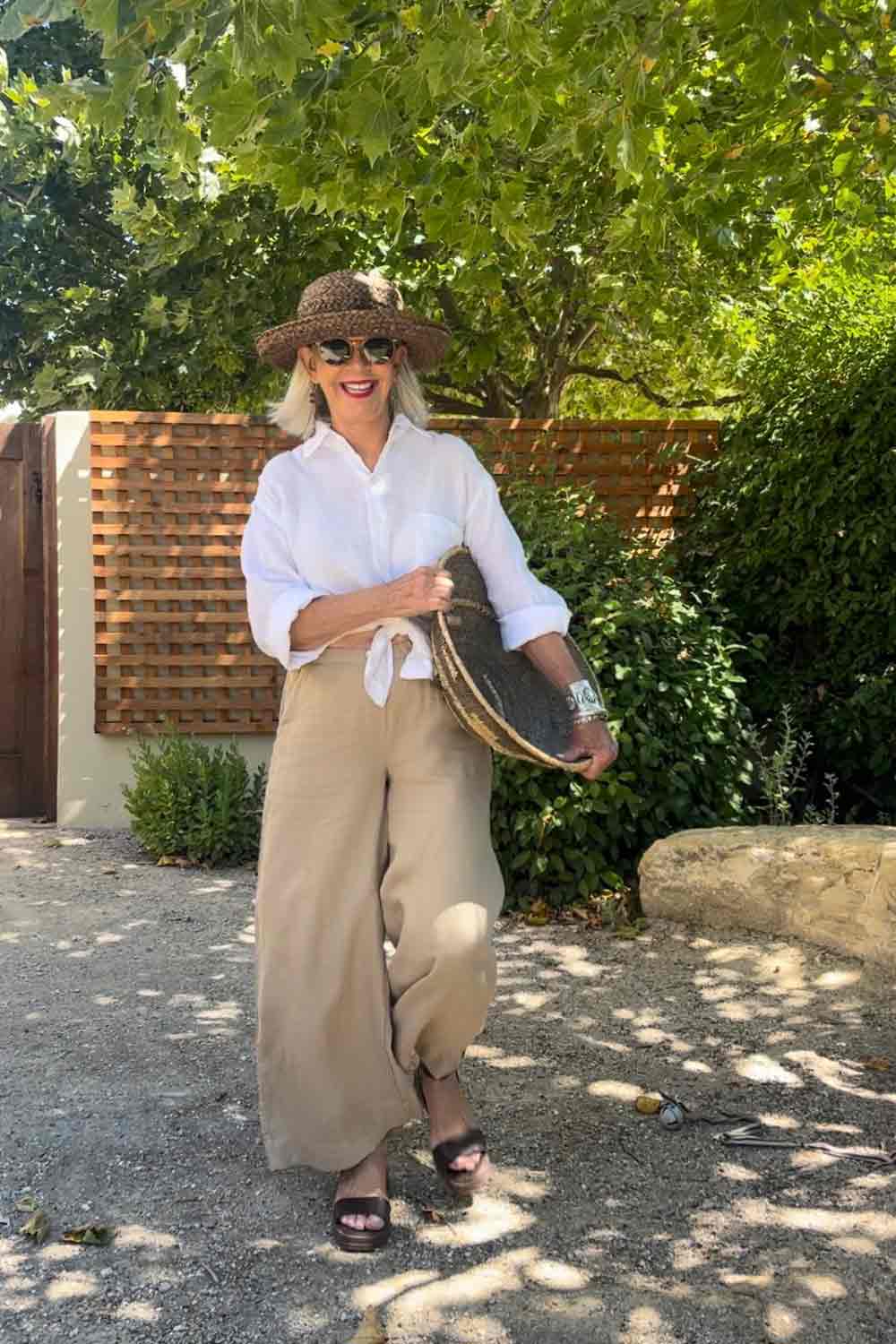
What I Know at 71 That I Couldn’t Have Known at 40: Design, Style, and the Art of Living Beautifully
At 71, I see this more clearly than I ever have. And I want to share what I have learned, not as a set of rules, but as an invitation to think about your own home, your own wardrobe, and your own life with the same discerning, endlessly curious eye that good design requires.
| The same principles that make a room feel beautiful apply, with surprising consistency ,to how we dress, how we live, and how we show up every single day. |
What a design career teaches you that no style guide ever will
I spent several years as anl interior designer before I started this blog, and the most important thing that work taught me had nothing to do with furniture placement or paint colors. It taught me how to edit.
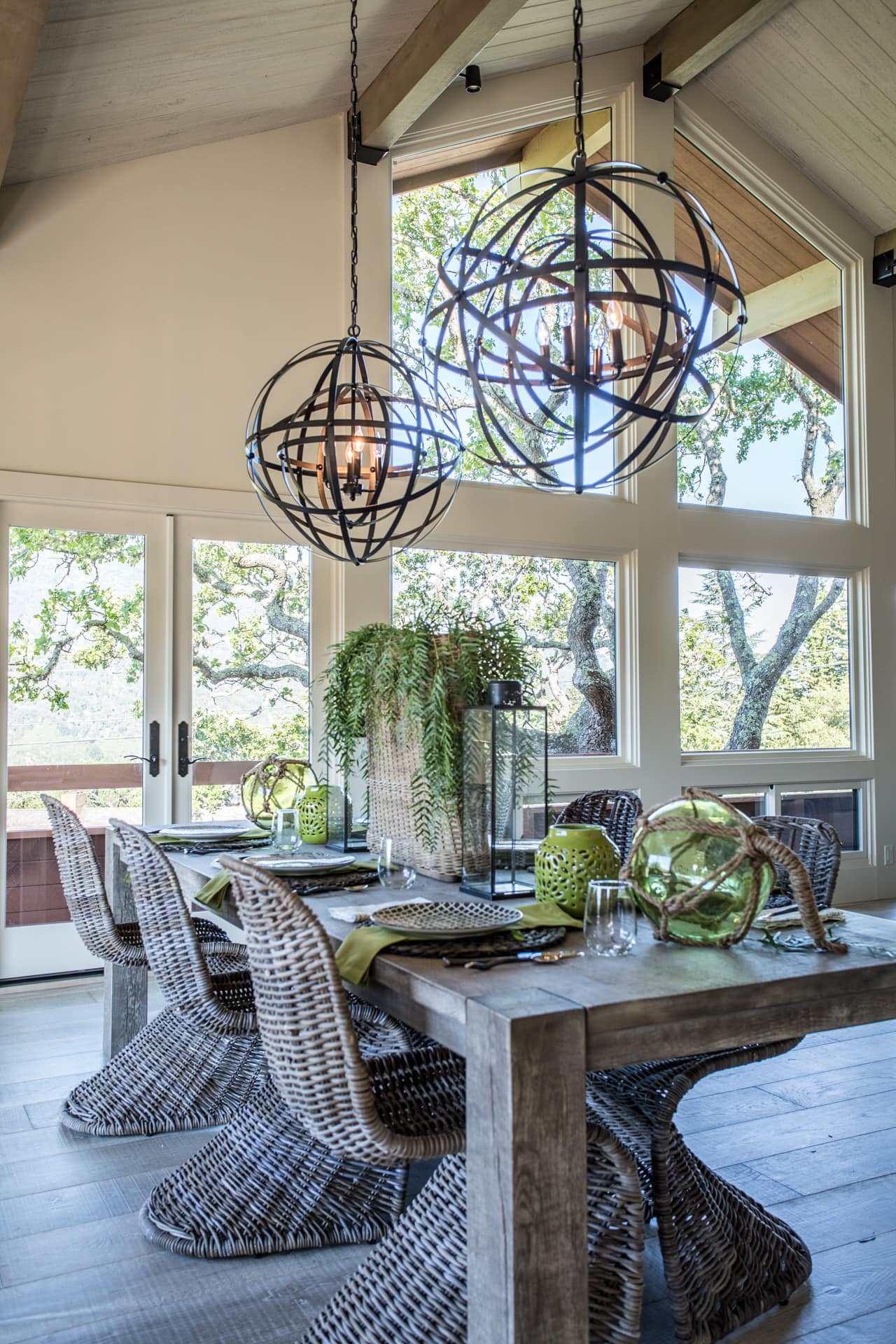
Every great room starts not with addition but with subtraction, with the discipline to remove everything that is “okay” so that what remains is only what is genuinely good. The piece with soul. The fabric with depth. The color that makes the whole room sing. The furniture that looks as if it is collected over time rather than being selected from a catalog.
The same principle applies to a wardrobe. The women I find most stylish, at any age, but especially at 60 and beyond are not the ones with the most clothes. They are the ones who have done the hard work of editing until what is left is a collection that is entirely, confidently theirs. Every piece fits. Every piece reflects something true about who they are. There is no rif-raf, only those pieces that tell their own personal story.
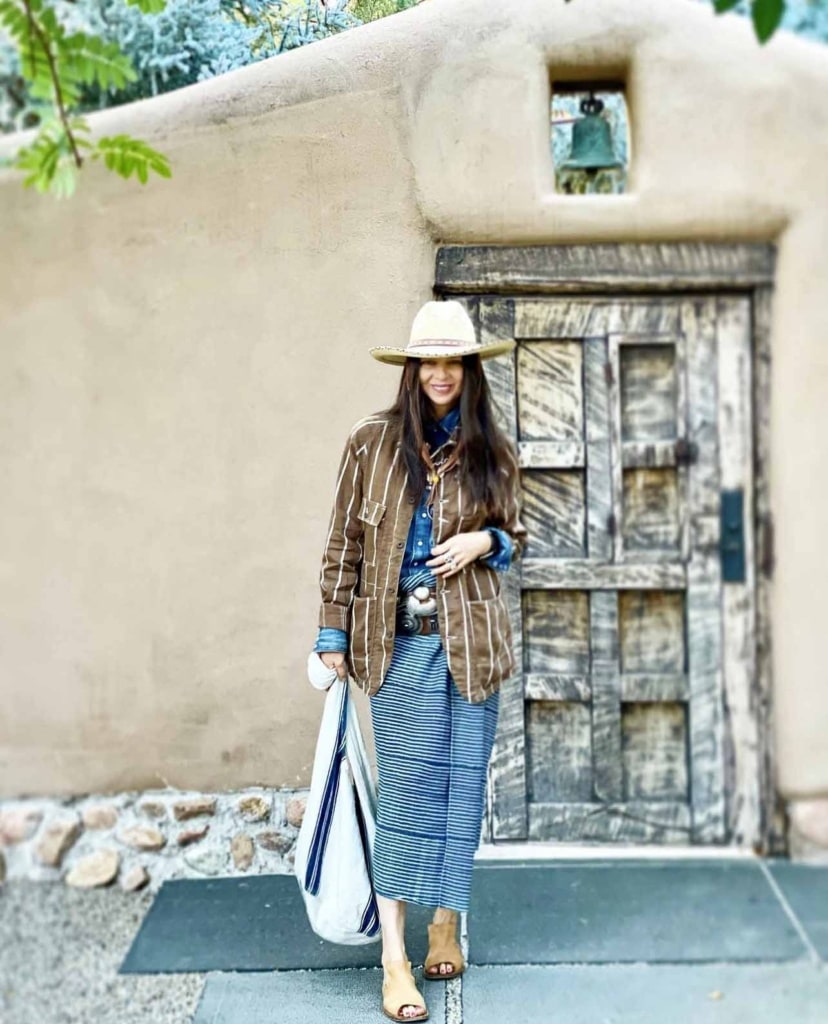
Jill Sharp Weeks is the perfect case in point. She leans fully into her own story and isn’t the least bit afraid to dress like her house. That kind of wardrobe does not happen by accident. It happens through the same process a designer uses on a room: look intentionally, remove ruthlessly, keep only what is fabulous!
If you love Jill’s aesthetic you migh enjoy reading How to Get Jill Sharp Weeks Collected Organic Look
| Every great room starts not with addition but with subtraction. The same is true of a great wardrobe. |
The collected look — in your home and in what you wear
One of the phrases I return to again and again, in my former design work and in how I think about getting dressed is the idea of the collected look.
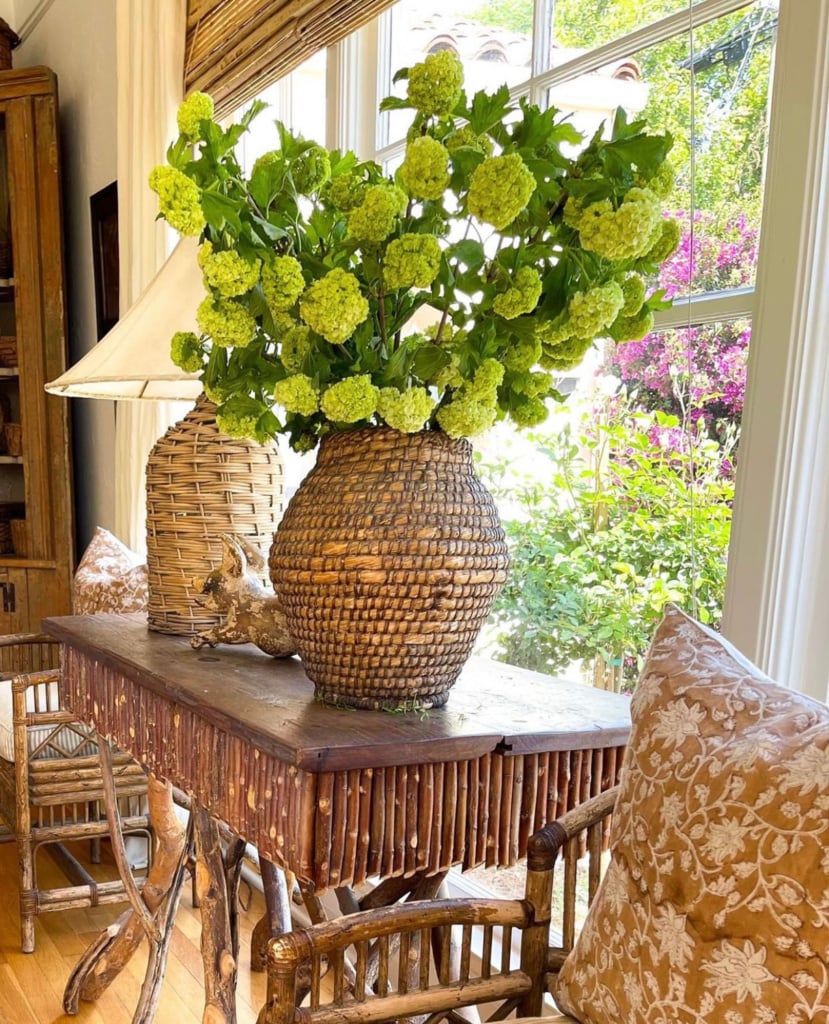
A collected home does not look as if someone ordered everything from the same page of a catalog. It looks like it has been gathered over time, with love and intention. The juxtaposition of an antique breadboard gracing a modern coffee table. A textile from a trip alongside a painting by a local artist. Layers of pattern and texture that feel personal rather than prescribed. It is a home that tells a story.
My personal style works exactly the same way. A vintage find alongside a beautifully made contemporary piece. A vintge jacket I have owned for years alongside something I discovered last season. Investment pieces mixed with things that simply made me happy when I found them on eBay or Etsy. The result, at its best, looks like it has been assembled over a lifetime, because it has.
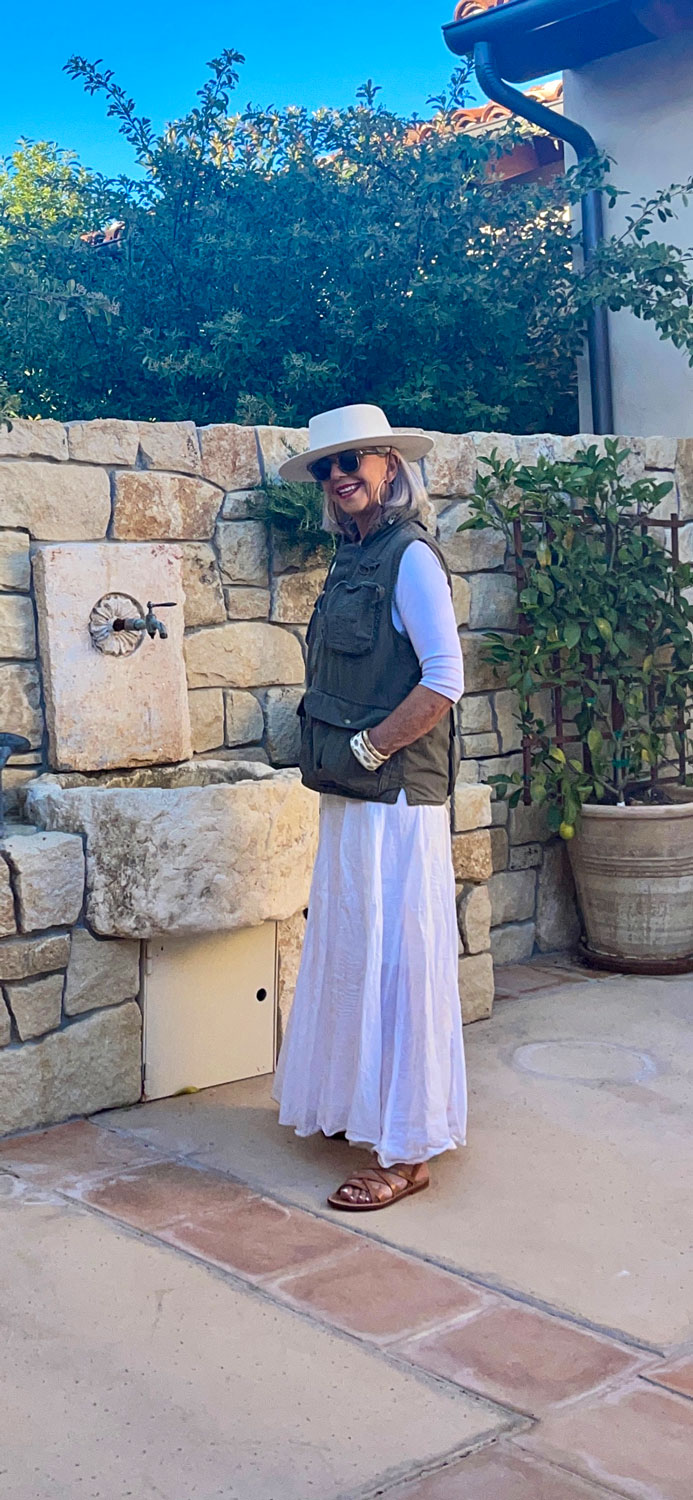
This is one of the great advantages of dressing and decorating at 71. I actually have a lifetime of beautiful things to draw from. I have a vintage jacket I bought in my 50s that still looks extraordinary. I have the antique chest Steve and I found antiquing in the Maine that anchors our guest room to this day. I have my newish garden garden, a work in progress. It will never replace the 30 year old collected garden from my former home but that’s okay. None of this can be replicated by someone who is 35 and starting from scratch. This is the accumulated beauty of a life lived with intention.
| A collected life — in your home, your garden, your wardrobe — looks as if it has been gathered over time, with love and intention. Because it has. |
The design eye crosses every boundary
Something I did not fully appreciate until I had been blogging for several years is how completely the design sensibility crosses the boundaries between categories.
When I write about fashion, I am drawing on exactly the concept I use when I write about interiors. The principles of proportion, balance, color, texture, and scale apply whether I am talking about how to layer a room or how to put together an outfit. The question is always the same: does this feel considered? Does this feel personal? Does this feel like it belongs together, or does it feel like pieces that happened to end up in the same place?

And then there is the garden, which I think of as the ultimate design project, because it changes with every season. It rewards patience in a way that few things do, and requires a particular kind of eye for how things will look not just today but months and years from now. My former rose garden, which I developed for years, is as much a design project as any room I have ever worked on. The color combinations, the heights, the succession of bloom takes the same kind of intentional thinking that decorating a beautiful room requires.
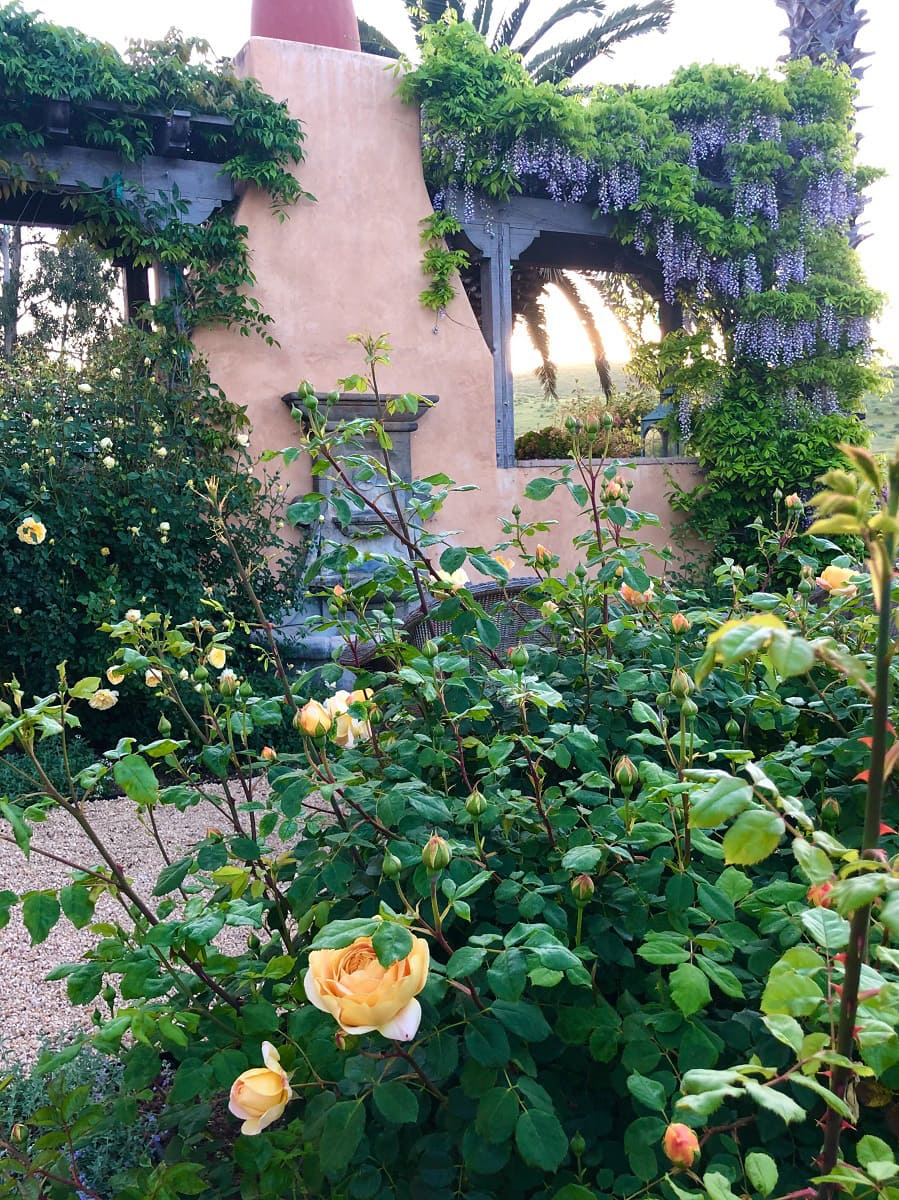
All of this is to say: if you have ever thought of design and style and garden as separate interests that happen to coexist in your life, I think they are actually one interest expressed in different forms. The same eye, the same sensibility, the same love of beautiful things can be applied to every corner of a well-lived life.
The brands that understand this — and the ones that don’t
Over the years I have become increasingly drawn to brands, in both fashion and interiors, that seem to understand this integrated approach to design and living.
In fashion, I seek out brands that offer something that will last but offers something different: they design clothes that assume the wearer has taste, context, and a life that extends beyond the moment of purchase. Their prints reference art and nature. Their silhouettes are considered rather than trend-driven. They are clothes that work as beautifully in a well-designed room as they do on the street, which sounds odd I know, but I think every design-minded woman will immediately understand.
In interiors, the brands I return to are the ones that prioritize craft, material, and the kind of beauty that improves with age rather than looking dated in two seasons. I am drawn to things that have a story, provenance, artisanship, and an honest relationship between form and function.

What these brands share, across categories, is a refusal to be disposable. They are making things meant to last, to be lived with, worn repeatedly, loved over time. That is a design philosophy I find deeply aligned with how I think about dressing and decorating. We have moved past the phase of acquiring. We are in the phase of curating.
| We have moved past the phase of acquiring. We are in the phase of curating. And that is a fabulous place to be. |
What this chapter looks like from the inside
I want to be honest about what daily life at 71 actually looks like through this lens, because I think there is a tendency to make these conversations sound more aspirational and less real than they actually are.
I “try “to start my mornings in the garden when the weather allows, instead of immediately checking my emails. There is something about that daily ritual of walking through growing things, seeing what has changed overnight, cutting flowers for the house, that sets the entire tone for the day. It is grounding in a way that I think of as design for the soul. You are in the presence of something beautiful that you have had a hand in creating (alongside Steve), and it puts everything else into perspective.

Even if I am walking Scout I try to look presentable. Not because I spend a lot of time on it. I do not. I try to keep my activewear current. My wardrobe at this point is curated enough that every choice I make feels pretty good. I reach for things I love. I have let go of the things I merely tolerated. The result is that getting dressed feels like an act of self-expression rather than a problem to be solved.
And then there is the house, which Steve and I have spent years making into a home we love. It is not finished. I do not think it will ever be finished, and I think that is one of the great pleasures of living with a design sensibility: there is always something to consider, to refine, to curate. A home is a living document. So is a wardrobe. So is a garden.
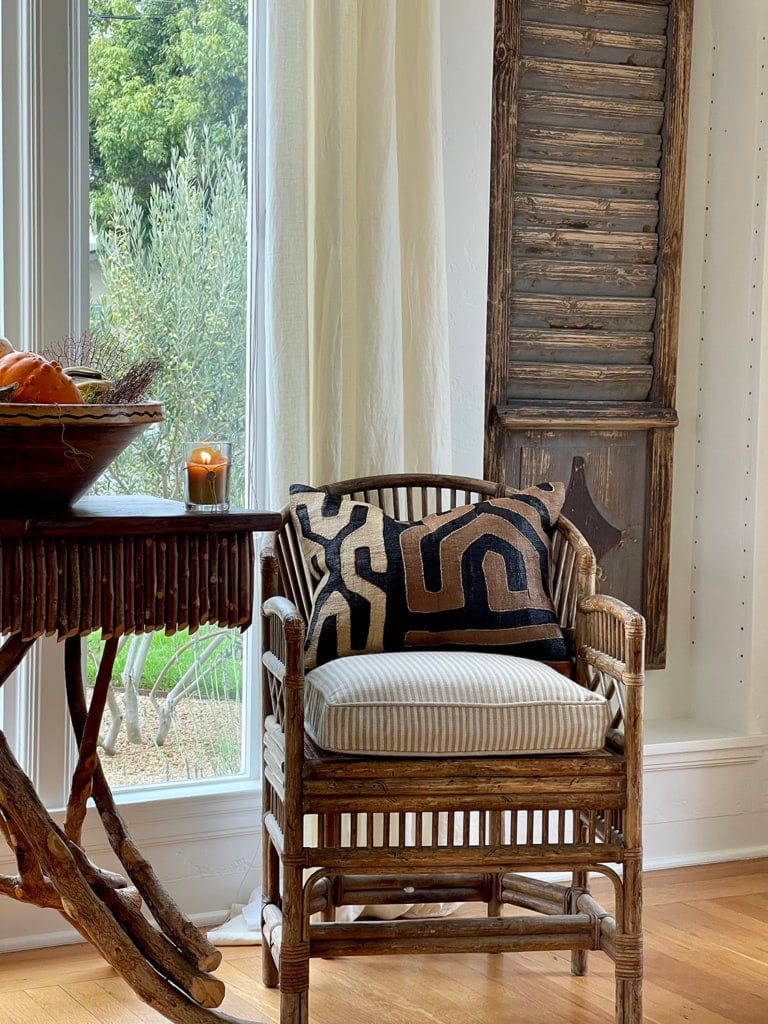
Editors Note-many have asked about the pillow cover on the chair. This Etsy seller has many kuba options here.
What I know now that I wish I had known earlier
If I could distill what thirty years of design thinking and a decade of building this community have taught me into a handful of things worth knowing, here is what I would say:
- Edit before you add. In your home and in your wardrobe, the most powerful move is almost always subtraction. Live with less, but make sure every single thing you keep is something you genuinely love.
- Quality and soul matter more than trend. A beautifully made piece, whether it is a cashmere blazer, a beautiful oil painting, or a well-chosen antique will outlast twenty trend-driven purchases and give you more pleasure every single time.
- Your home should tell your story, not someone else’s. The most beautiful homes I have ever been in are not the most expensively decorated. They are the most personally decorated full of things that mean something to the people who live there.
- The same eye works everywhere. The principles of proportion, balance, color, and texture that apply to a beautiful room apply to a beautiful outfit and a beautiful garden. Trust your eye. It knows more than you think.
- This chapter is not a diminishment. Everything you have accumulated, the taste, the confidence, the knowledge of what you love and loathe makes this the most creatively rich chapter of your life. Treat it that way with respect.
| The most beautiful homes I have ever been in are not the most expensively decorated. They are the ones that tell a story. |
A final thought on living beautifully
I started this blog in 2012 with a simple idea: share the things I loved. Interior design, Fashion, the garden Steve and I were creating in the Salinas Valley. Good food and wine from California’s Central Coast. What I did not anticipate was how completely those things were connected. How the same sensibility that made me love a well-layered room made me love a well-layered outfit, and how the patience that a garden requires translated into a different, slower, more considered approach to everything.
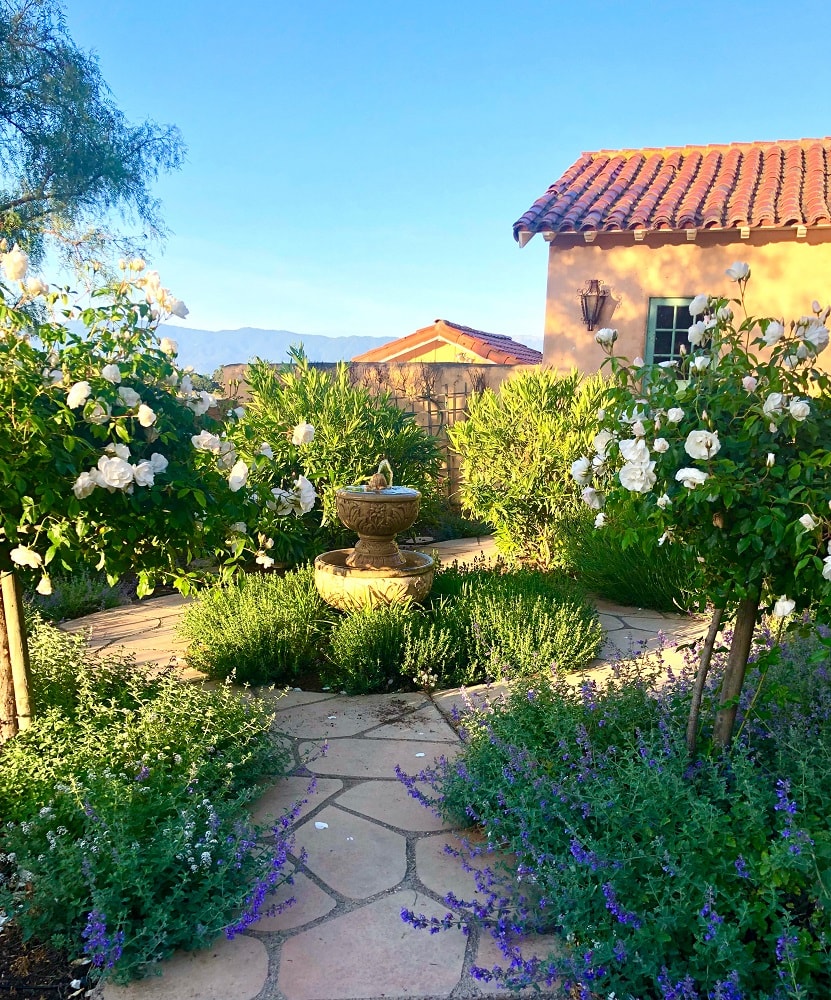
You might enjoy my post What my Garden has Taught me About How to Live.
At 71 I can say with absolute certainty that the design eye once curated only gets sharper. The taste only gets more refined. The ability to walk into a room, or open a wardrobe, or look at a garden and know immediately what it needs and what it does not need. The ability is the gift of experience, and it is one that keeps giving.
Remember you are not past your most beautiful chapter. You are in it.
I would love to hear from you. What has living with a design eye meant in your own life, whether that is in how you dress, how you decorate, or how you tend your garden? And is there an area where you feel like your eye has sharpened most as you have gotten older? Let’s get the conversation going.



Such a great blog post. Thank you.
Cindy,
Love your blog but rarely comment. I loved Mersea today and all they had to offer. How fun to meet people who read your blog. I always look forward to it.
Cheryl Leonard
Hey Cindy,
This is my first reply to your blogs. I’m stepping out of my comfort zone as I need to do in many areas of my life. I enjoy all your blogs but this one spoke to me. I’m not an artist in any form but a former family psychotherapist. I’ve tried to dress nice in my profession, actually tried to be invisible as to not take away from my clients. Now that I’m retired, I want to step out and find my style in clothing and at home. Thank you for this article. I’ll contemplate my garden, home and clothing to become authentic, inside and out. Thank you for shining a light on this process
Hi Anita
Thank you for the lovely comment and you have brought up something very important. Many of us have dressed a certain way in our former careers or lives out of necessity. Now that many of us are leading much different lives in my case a more casual lifestyle, or many others now retired. It is time to focus on ourselves and our new beginnings! I hope you will comment more often your comments are very valuable.
You’ve definitively raised the bar, Cindy. And now I have to be accountable. Hard for a painter as I now have to wear smocks over my fabulous collected wardrobe! 🎨
Hi Leslie!
You always look fab in your pictures!! Smock or no smock!!
Such a thoughtful post.
Hi Janet
I am glad you enjoyed it!!
Thank you so much Janet!
Love this post Cindy! So true.
Authentic, personal and collected picks chosen over time are what I admire most about women’s wardrobes and their beautifully decorated homes!
Hi Carol
As you know we are on the same team!!
Love love love this post. You used to tell me you didn’t that well – SO NOT TRUE!!!
Someone once told me I was the most visual person they had ever met. I am similar to you – in all three of these areas. I have been in this house with this yard for 30+ years and am still not done. It is all ever evolving. The thing that I wish I could do better, is edit.
These days, I am quietly editing though – we take a box to the thrift shop every month…I am resisting the urge to buy more for the house and in my wardrobe.
I love your viewpoint at 71. I wish I had known you at 55.
If I had been able to blog then too, maybe we would have! ❤️
Hi Gray
I am not a good writer. It is hard to edit when you have had a store!! I have a friend who has a wonderful resale shop. I told her the same thing. I need to take her a box every month!
What a lovely topic. Without knowing it this is the way I have lived my life. Years ago a young female engineering student was doing an internship in our office. She said to me that she had never seen me wear the same thing twice! Not true. I had a plan. I built my wardrobe around classic style and always had a list of next year’s purchases. I received comments like “boy, your husband sure dresses you well, and why can’t so and so dress like you”. I was never aware of what this all meant until my husband said to me when we were out shopping, and he asked me if I was aware of people looking at me. I didn’t go crazy shopping, in fact I’ve never really enjoyed shopping. I always had a plan and bought quality items, and took care of everything. Having that plan helped tremendously. I retired at 57 because I was a saver, and I no longer wear suits and heels, but I put even more thought into my clothing now. I still wear a leather moto jacket, and cashmere sweaters that are probably close to 15 years old but look like new. I think if people develop a plan for their life and work at it they can accomplish anything be it clothing, decor, travel – you name it.
I absolutely adore this Lyn!! That is the beauty of a collected wardrobe!!
Hi Cindy. I’ve always admired your style–simple, yet elegant. So put together. I somehow manage to gather a heaping closetful of clothes, only to look in and not be able what to wear, or I’ve gained 20 pounds. I’m 65, and I have a terrible time finding clothes that fit properly. So I settle for frumpy, and I only feel worse for not putting forth any effort. How does one begin to acquire and basic, casual wardrobe that conceals so many flaws?
Hi Beth
We have all been there. I have to remind myself everyday as well, especially being in the business that I am. I am the heaviest I have. been in my life…I really need to work on that too! It is so hard at this age because we want to have fun and enjoy life!!
Cindy, I so enjoyed reading this post because it beautifully expressed how I feel but could never have put into words. Wondering if you have written any design books? If not, this post would make a wonderful
Introduction! I would certainly be there to buy your book! Hope you will think about it.
Hi Karen
I have never written a book. I am really not a great writer. I write how I speak…all over the map! I have been trying lately to reel myself in and make my posts more organized ha ha!
Hi Karen
I so appreciate your confidence but I am really not much of a writer. With all the tools we have available now I find if I have an outline, my writing isn’t all over the map like me!
What you have written makes so much sense! As a person who knows you, your home, your gardens, I can vouch for how you really are practicing what you preach. As someone who tries to do the same, I thought about this after reading. I can see how my childhood influenced me because growing up, my parents were about less but better. My mom had a sense of style that went from her wardrobe to the way she decorated our home (with an interior decorator whose name I still remember). I have some of the pieces from then in my own home many years later. Thanks for helping people understand that conspicuous consumption is not the way to go.
Hi Wren
I think buying better and less makes more sense in so many ways…
Good morning,
Today’s blog is such a lovely reminder to live with intention in the moment. The principles you suggest, no matter our age, are a gracious guide for doing so. And, thank you for another opportunity to get lost in the beauty of your former rose garden framed by the magnificent purple wisteria.
I’ve mentioned before that while we could have chosen a retirement apartment with a balcony view of Lake Washington, we chose one with a back door that opened onto a neglected and poorly designed terrace. Nevertheless, I could imagine the potential and joy it would bring to this season of my life.
After almost 4 years, what we have now named “Celebration Terrace” for the featured sculpture, is a lush garden filled with native plants, trelessed vines, our collected furniture and vintage flower pots, and inviting seating areas. Discarding, dividing, and moving plants resulted in curated “less is more”!
Hugs from Mercer Island,
Diney
Hi Diney!
With gardens we have to be patient. A one gallon potted plant (or even a 6″) will catch up to the size of the five gallon in no time and be healthier and stronger. We have enjoy the journey and not expect an instant garden, just like our homes.
Dear Cindy. You know how much I love your blog – seriously I think this one is my absolute favorites! I so relate to everything you said! We have curated our home over time with memories from trips to Italy, vacations in Michigan, Sante Fe, Hawaii and Napa and edited out the pieces that have no meaning. I smile when I walk in every room. A fun activity that I use for outdoor is collecting beautiful washed stones in Oregon with my granddaughter.. I use them in pots and along the edge of the courtyard. We also try to find one interesting piece of driftwood for the courtyard or back yard, They go well with our native. plant design in Arizona. So agree – our homes, wardrobe and outdoor space come together harmoniously. As always, thank you for the inspiration, Anna in Arizona
‘We have moved past the phase of acquiring. We are in the phase of curating. And that is a fabulous place to be.’
That, in one well said phrase, covers it all. We moved from a four-bedroom house spread over three floors into a two-bedroom condo in a senior living community. Edit, edit, edit, has been the motivation all the years before and since the move. But I like the idea of viewing it as ‘curating’.
Excuse me, after my yoga class, I’m going to go curate my collection. Even sounds more pleasurable. I should have some music playing and a cool beverage nearby while I curate…
I would LOVE to learn how to edit!
We all need help Sally!!
Great blog! Love the pillows on the wicker chair. Where are they from? Have a great day!
Hi Gigi
Those pillows are from Etsy. Let me see if I can still find them! This seller has several options https://go.shopmy.us/p-64043549
A very insightful post Cindy.
The line that “hit me’ best is that we are not in a phase to acquire, but a phase to curate.
That thought really resonates with me. I find I have too often shopped , both online or in person, to find that perfect piece. That piece that would solve all problems, solve what’s missing…..but I had it all along. It was just hiding amongst all the acquired stuff. (Cheers to the Wizard of Oz )
It’s time to share the never worn, never used things with others and bring the loved things to the front!
Thank you Cindy
Suz
Hi Suz
I remind myself all the time to “curate” instead of acquire. If it is something that I absolutely love …why not? If it is just okay-no…
Wonderful post! Love your style in home decor and fashion!
Hi Linda
Thank you so much for your kind comments and for following along!!
Thank you so much Linda”!!
Cindy, I loved this post for so many reasons! I had never thought about the idea of “editing” a room, but it makes perfect sense. I’ve recently moved into a home that needed a lot of TLC, and I’ve had so much fun creating spaces that draw me in and showcase the furniture, art, and meaningful objects I’ve collected over the years. Every piece holds a memory, and I cherish them all.
What’s funny is that I naturally edited before moving in and continue to do so as I settle in. I even had my husband paint our front door a vibrant orange-red—a color that seems to be finding its way into my wardrobe lately, too!
And I absolutely loved Jill Sharp’s style, both in her clothing and her home. Such wonderful inspiration from both of you. Thank you for sharing!
Hi Kelli
Your front door sounds fabulous! I love a statement front door! I would love a fixer upper but my husband (the retired contractor) says no!!
Love this post! I love all your posts, come to think of it! Following you for years now, I have come to each of your posts knowing that there will be something “new” but has that curated and timeless feel. There is the thread through each as you share home, personal and garden style. You are my “go-to” gal for inspiration. Thanks for all of it.
Hi Holly
Thanks so much. I know we are kindred spirits. I so admire you for your courage in dealing with your husband’s passing. You are the one to admire.