
How to Embrace Your Silver Hair: Style Secrets from Kerry-Lou Henson

This is the seventh post in my all-new Self-Care Series. Today, we are chatting again with Kerry-Lou Henson, NYC Makeup Artist and Hair Stylist who we first interviewed back in 2025 when she shared all her top makeup tips! You all loved that post so much that we wanted to do a follow-up feature and focus on her hair care tips.
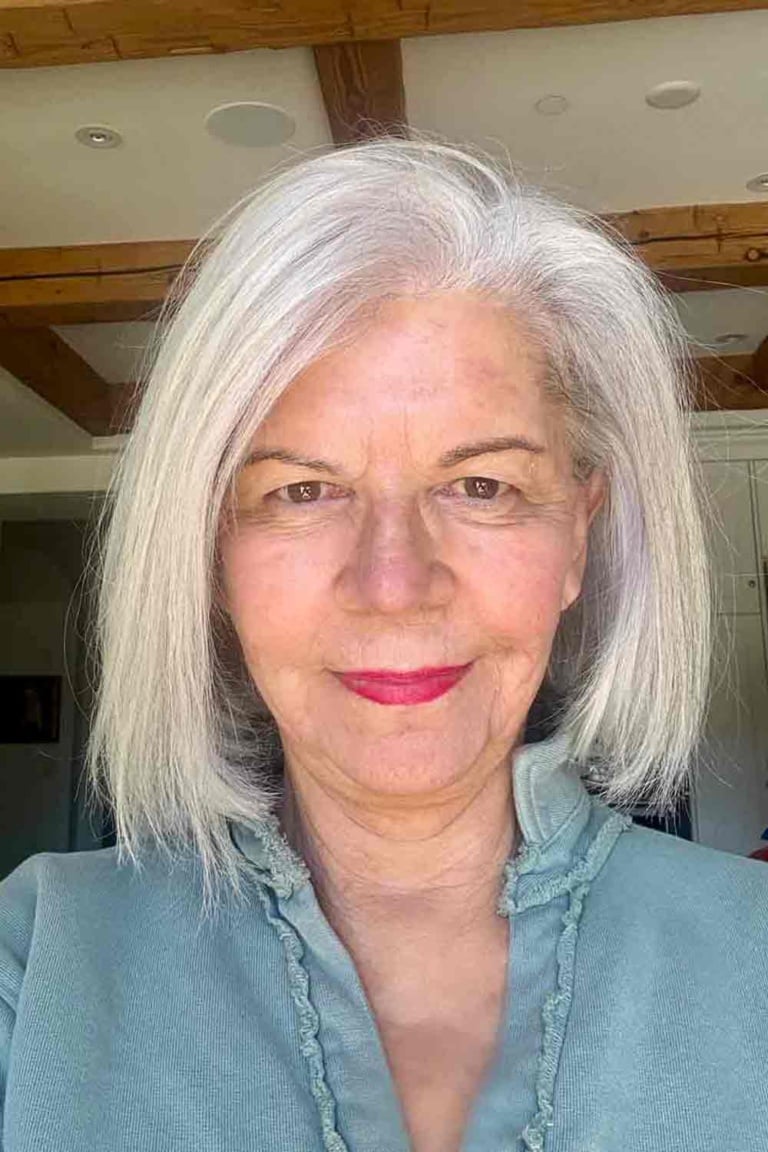
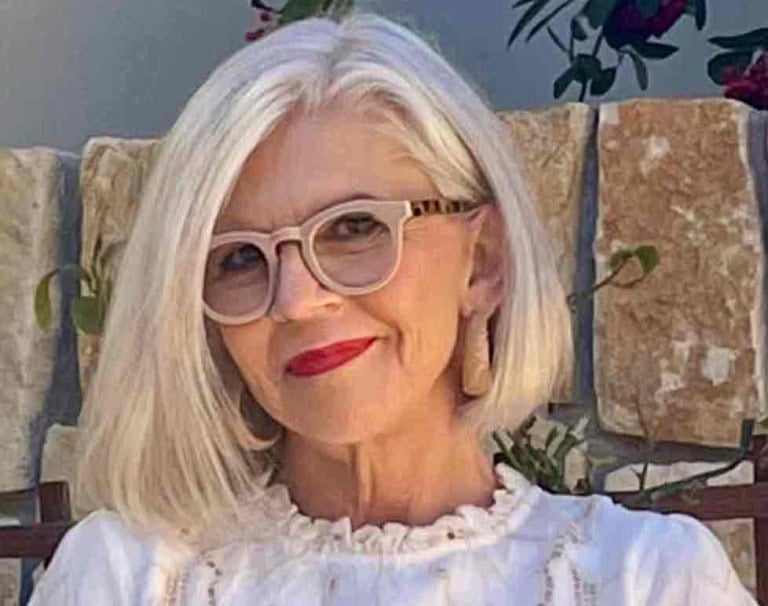
If you’ve ever wondered how to embrace your silver hair with confidence and style, Kerry-Lou Henson is your girl. This London-born, New York-based makeup artist and hairstylist has spent more than four decades perfecting her craft. From prepping guests for television appearances on shows like Good Morning America, The View, and The Today Show before turning her expertise toward what she’s most passionate about today: helping women over 50 age with style, grace, and a whole lot of authenticity. After making the decision to let her own hair go naturally silver, Kerry-Lou never looked back, and she’s since built her Silver Style Studio platform to guide other women through the same journey. I sat down with this pro-aging powerhouse to talk silver hair care, and what it really means to wear your age beautifully. Okay Kerry-Lou let’s dive in!
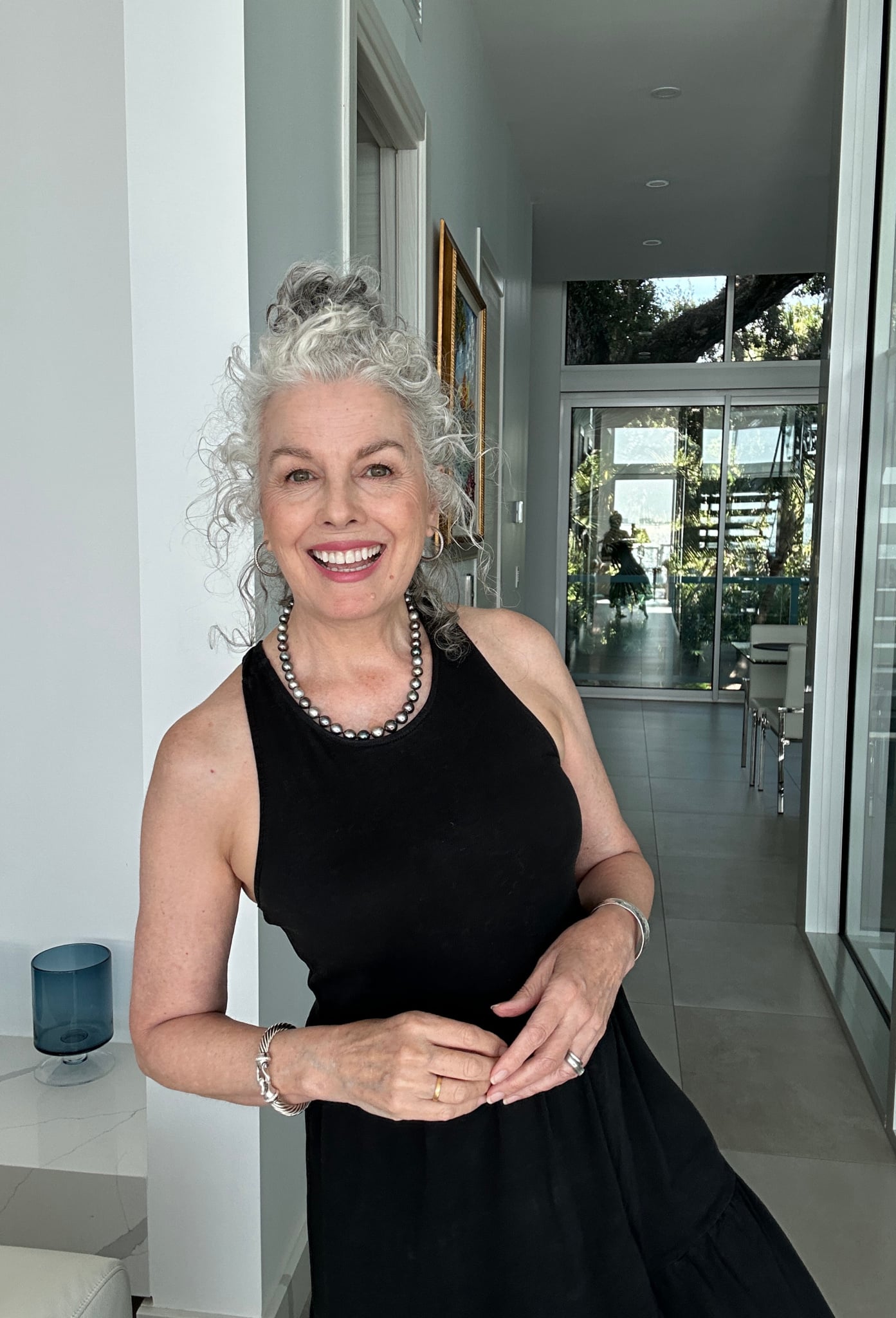
Tell us a bit about yourself — who is Kerry Lou Henson, and what do you do professionally as a makeup artist?
Hi Cindy, it’s great to be back—thank you for having me.
I’ve been a makeup artist and hairstylist for over 45 years. I actually started very young, working in a beauty salon in the UK at just 14 years old as a hairdresser’s assistant. It was hard work, but I learned so much. We were doing roller sets, a lot of teasing, and transitioning from beehives to blowouts—women over 60 will know exactly what I mean!
After about three years, I moved into modeling in London. That’s where I really deepened my understanding of makeup artistry and hairstyling, especially for photoshoots.
Eventually, I moved to New York, where I built a long and rewarding career working on photoshoots, television, and special events. These days I’m semi-retired, but since my husband is a photographer, I still do makeup and hair for his shoots.
I also share my skills on my YouTube channel, where I’ve built a community of over 180,000 subscribers. Some people have been with me for over 10 years—it’s a truly supportive and wonderful space.
Let’s talk about your gray hair journey. When did you first start going gray, and what was your initial reaction? Did you embrace it right away or did it take some time?
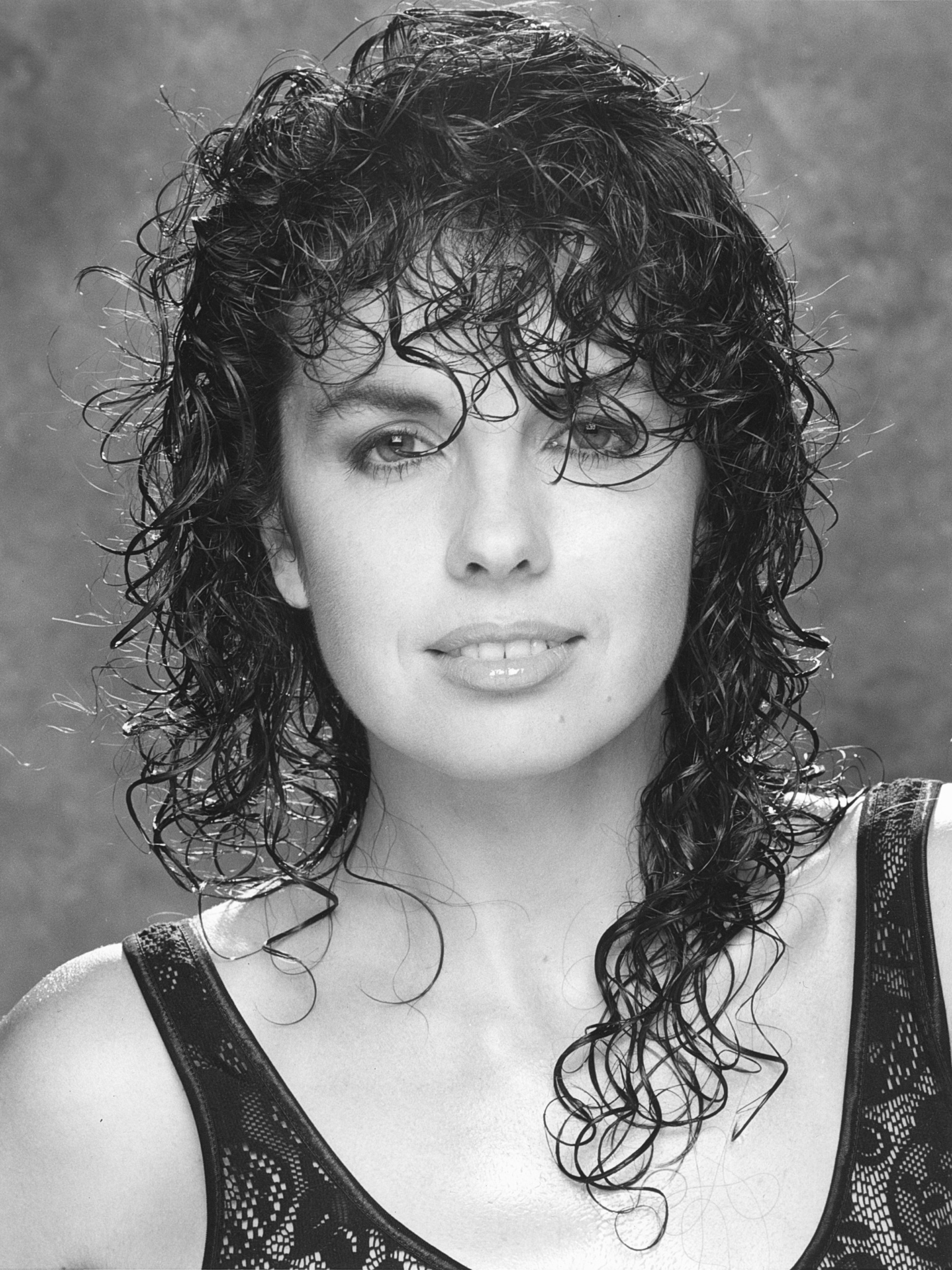
My hair started turning gray when I was around 28, although it wasn’t very noticeable at first. My hairstylist would use a tinted glaze to blend the grays, which worked quite well. At the time, my hair was long, layered, and very curly—very much in line with the popular perm styles of that era.
By my mid-30s, I felt I needed to fully cover the gray, as that was simply what we all did back then.
Around age 40, I was going through a divorce and, like many women during major life changes, I cut my hair—from long and curly to chin-length. It was much easier to maintain, though I continued coloring it dark brown.
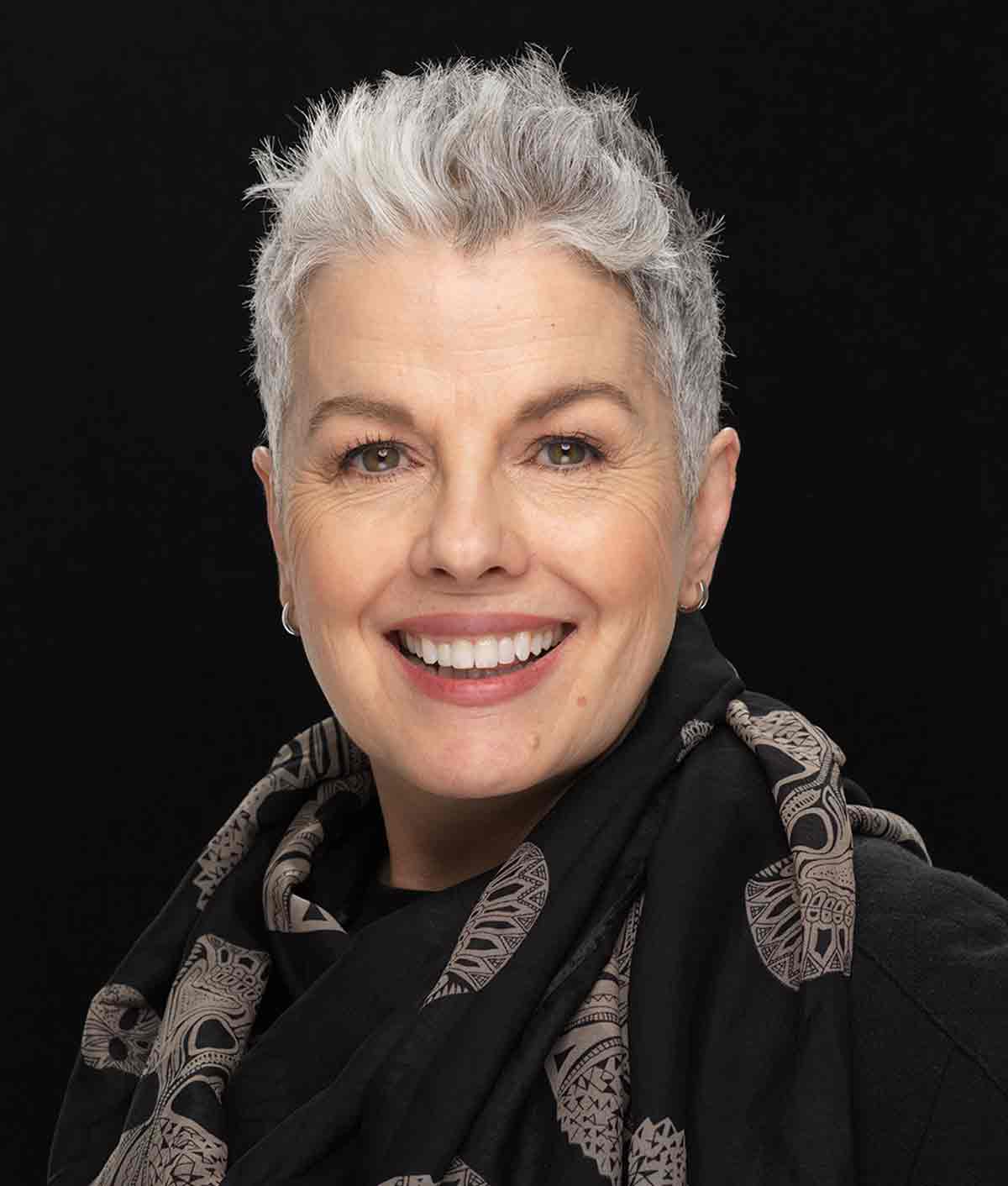
At 42, I went even shorter, which I loved. It simplified everything. Around that time, I also began experimenting with different shades, as the dark brown started to feel too harsh. I often wore a chocolate-cherry tone, which was very popular then.
At what point did you decide to stop coloring your hair and fully embrace your natural gray?
My hair was graying most noticeably around my temples and forehead, so at around 50, I began experimenting by letting a streak grow out—think Bonnie Raitt. I called it my “wisdom streak.”
I really liked how it looked, and it had the added bonus of reducing how often I needed to color my hair. Unfortunately, I don’t have many photos from that time—it was before we were all documenting everything on social media!
What was the transitioning process like?
As that streak grew wider, I started to really appreciate how the silver complemented my skin tone. I often suggest that women begin by growing out a small section—it’s a great way to get a sense of how your natural color will look.
The truth is, you don’t always know what your gray will look like—whether it will be silver, white, or a mix. Many women love it once they see it, though some do choose to continue coloring, and that’s perfectly fine too.
Interestingly, at 55, I made a completely different choice—I went blonde! At first, it was quite shocking (think Big Bird yellow), but after some toning and finding a skilled colorist, I achieved a softer look and maintained a short blonde style for a couple of years.
That said, the bleaching was very damaging, and keeping my hair short was essential.
By 57, I’d had enough. I became concerned about the chemicals I was putting on my scalp. We often forget that the scalp is skin—we wouldn’t put harsh chemicals on our face, so why do we accept it for our scalp?
That was the moment I decided to stop coloring my hair for good. A beautiful natural pattern was coming through, and I loved it.
What advice do you have for women going through that same transition right now?
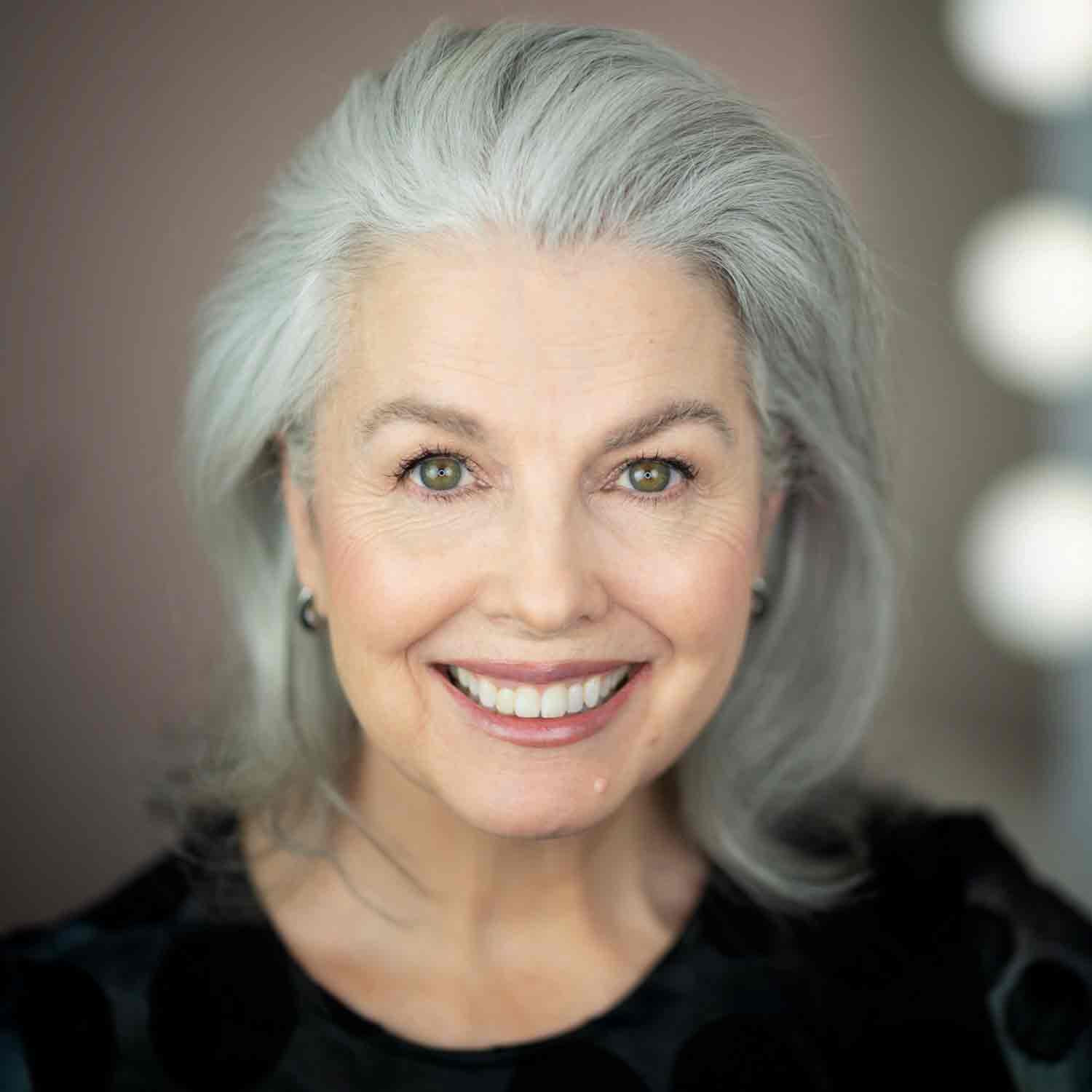
If I were to do it again, I would skip a lot of the back-and-forth. Today, silver hair is accepted—even celebrated—which makes the process so much easier than it used to be.
If you’re open to it, I recommend growing your hair out a few inches (about six months), then going for a chic short cut. Invest in a really good stylist for that first transformation—it makes all the difference. And remember, you’ll likely be saving money by no longer coloring your hair.
Short hair also puts more focus on your face, so it’s a great opportunity to refresh your makeup and highlight your best features.
If short hair feels too drastic, you can absolutely transition gradually while keeping your length—just trim the ends over time. There’s a wonderful community of women online sharing their journeys, which can be incredibly encouraging.
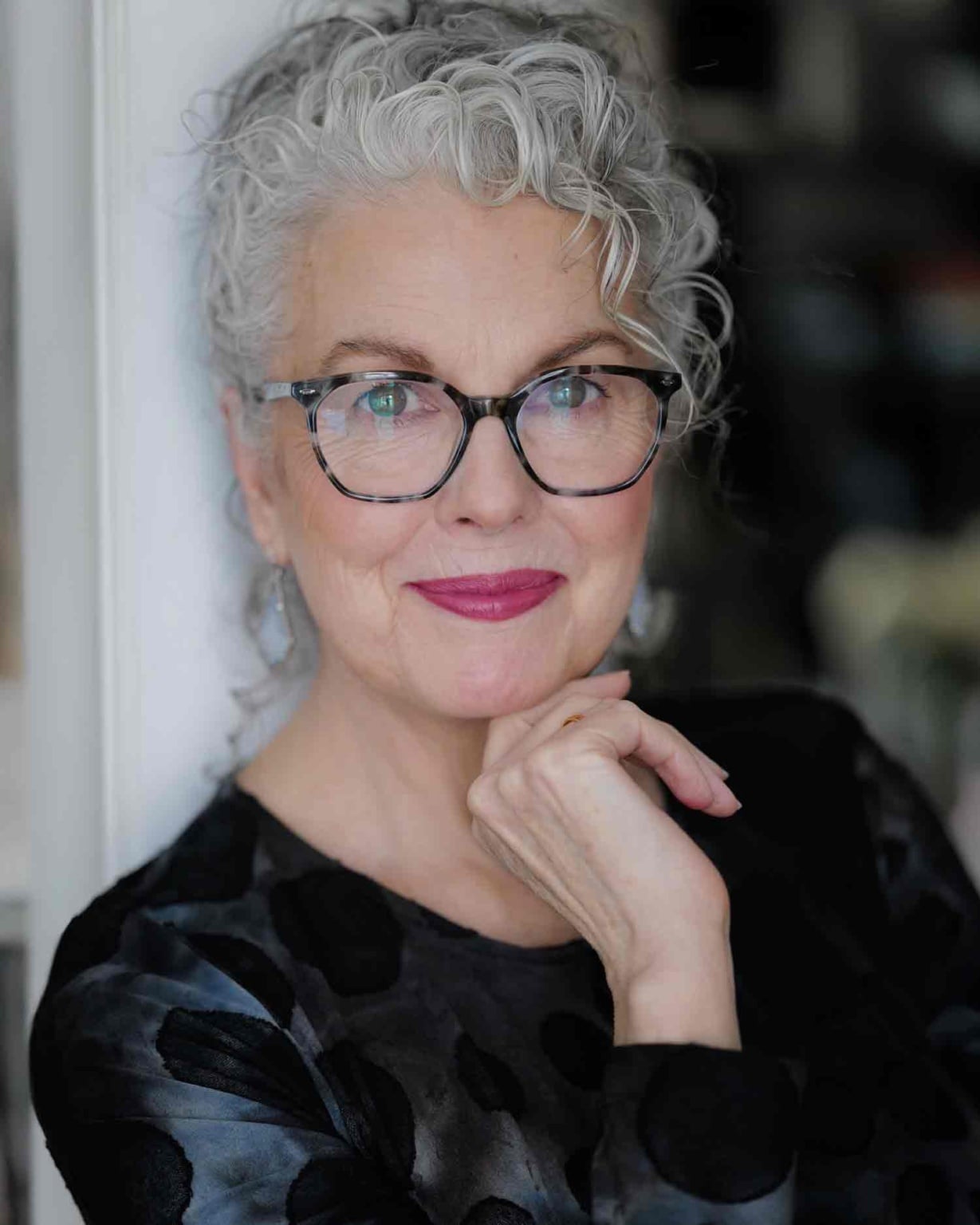
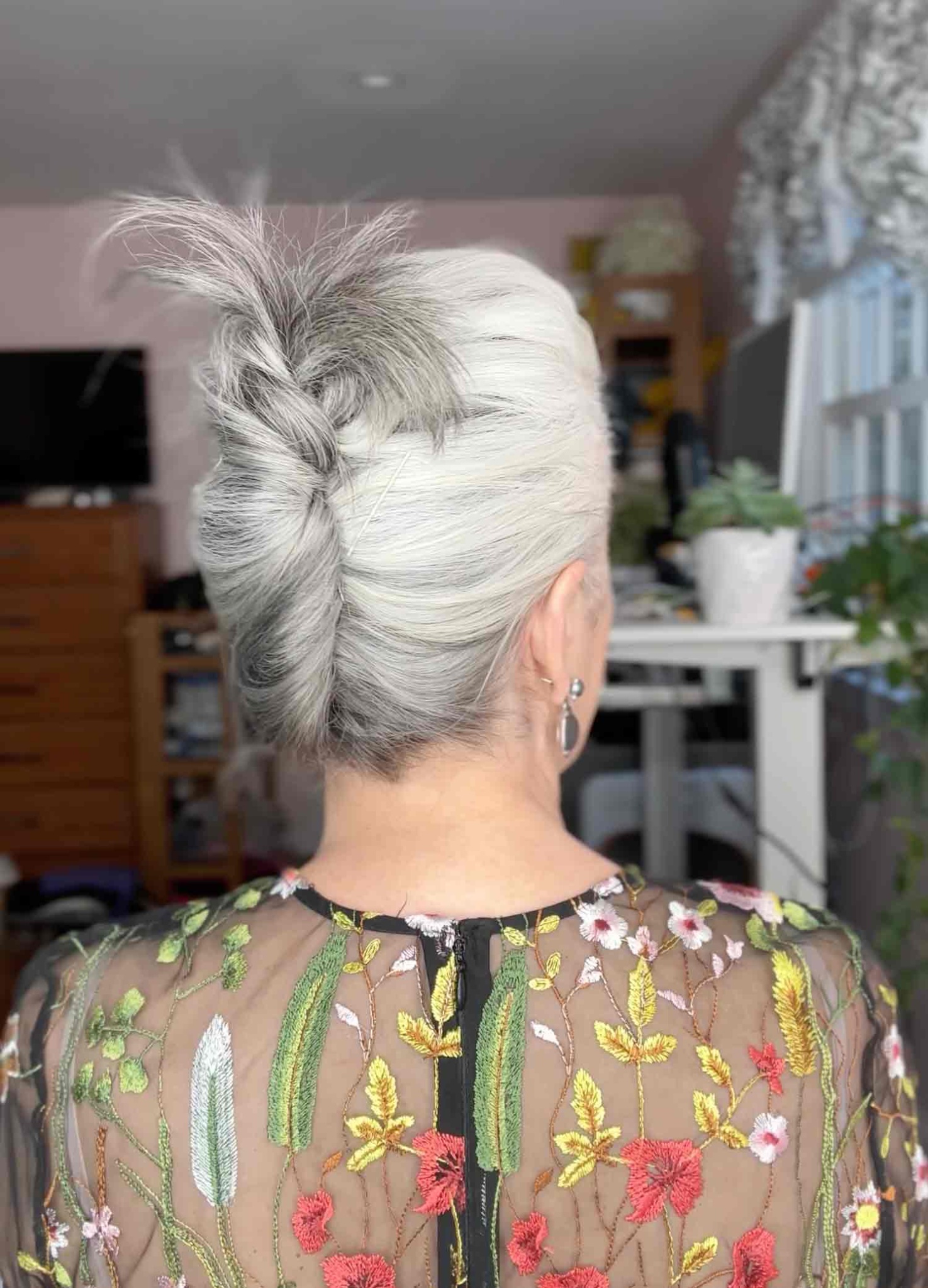
You can also use temporary products to soften the line of demarcation, and mastering a few simple updos can help during the transition phase.
Most importantly, treat this as an exciting reinvention. Update your wardrobe, try new styles, and embrace the change fully.
What do you love most about having gray hair now that you’re fully on the other side of the transition?
What I love most is the freedom. I’m no longer constantly aware of my roots coming in—there was a time when they would show after just a week, especially in bright sunlight.
My hair also feels so much healthier now, and I’m really enjoying its natural texture again—soft, curly, and full of life.
I do still straighten it occasionally, but because I’m no longer coloring it, it can handle a bit of heat from my dryer or straightening iron. (That said, I always recommend keeping tools below 300 degrees and using low to medium heat.)
And honestly, I receive far more compliments on my hair now than I ever did when I was coloring it. There’s also a lovely sense of community—what I like to call the “Silver Sisterhood.” There’s often a knowing smile exchanged when you pass another woman embracing her natural gray. It’s a special feeling.
Your gray hair is naturally curly and absolutely beautiful. For those of us with curly hair, can you walk us through your personal curl care routine — including the products you love for defined, frizz-free curls?
Thank you! I do try to keep it relatively simple—though some might disagree!
I start with a low-poo or no-poo cleanser (DevaCurl Low-poo Original) meaning a shampoo with little to no sulfates. Once a week, I’ll use a clarifying shampoo to remove buildup (Odele Clarifying Shampoo) because a healthy scalp really does mean healthy hair. Odele also offers a purple shampoo for neutralizing yellow hues that can occur with gray hair.
Conditioning is essential for me. I work it in thoroughly—curly hair thrives on moisture—and once a week I’ll use a deep conditioning mask. If I’m in the mood to splurge, I love Colleen Rothschild’s Hair Mask, which feels incredibly luxurious and smells like a high-end spa experience. A more budget-friendly option I often recommend is the Marc Anthony Repairing Anti-Breakage Mask—it comes in a generous tub, so you can really saturate the hair. After washing, I gently detangle with a wide-tooth comb and blot the hair so it’s no longer dripping. Then I apply a curl cream to help define and group the curls. (Curlsmith – Hold Me Softly Style Cream)
Next comes gel, which I distribute evenly with the comb. I like (Hi! Definition by Trelux)
From there, I have two styling options:
For a more polished curl: I work in sections, encouraging each curl by wrapping it around my finger (you may end up looking a bit like Shirley Temple at this stage!). If I have time, I air dry. Otherwise, I diffuse on medium heat, hovering over the curls rather than disturbing them.
Once fully dry, I gently break up the curls with my hands so they look soft and natural.
For a quicker routine: I simply diffuse more freely and let the curls fall as they may. If it’s not a perfect hair day—well, that’s when a chic updo comes in handy!
For anyone who wants curls but wasn’t born with them — what curling tools, products, and techniques do you recommend for getting curls that actually last?
I recently found a curling iron from Curlsmith that I really like—it includes one handle and four interchangeable barrels, which create different types of curls.
That said, I use heated tools sparingly, as too much heat can damage the hair and even cause discoloration over time.
For long-lasting curls, I recommend setting them with clips while they cool and finishing with a light mist of hairspray. This helps lock in the shape and gives a more polished result.
For curly-haired women who want a smooth blowout, what’s your go-to approach? What tools and products make the biggest difference?
First, I’ll say this—humidity matters! In very humid climates, like Sarasota in the summer, I usually don’t even attempt a blowout.
When I do, I start with Living Proof No Frizz Shampoo and Conditioner, followed by a thermal smoothing product like L’Oréal Blow Dry It Thermal Smoother Cream or Davines LOVE Smoothing Perfector Heat Protectant Serum. Just be careful not to use too much, as it can weigh the hair down.
The Dyson hairdryer has been a real game changer for me—it regulates heat beautifully and helps prevent damage. I section the hair using butterfly clips (like these: https://amzn.to/4sgwlDy), starting underneath and working my way up.
For brushes, I love my Olivia Garden round brush https://www.ulta.com/p/ceramicion-speed-xl-round-thermal-brush-xlsImpprod18041093?sku=2526166
A key tip: on the final pass, leave the brush in place and let the hair cool—this helps set the shape, almost like a roller. If you have two brushes, you can leave one in while working on the next section.
To finish, I lightly mist with Elnett hairspray, which is a beautiful, fine formula that won’t dull the hair.
If I want extra sleekness, I’ll quickly pass a flat iron through sections using low to medium heat. My favorite is the CHI G2 1.25” Professional Styling Iron
For flyaways, I’ll use a small amount of Bumble and Bumble Grooming Cream, and for more stubborn areas at the root, the TIGI Hair Wax Stick works beautifully.
With so many hair care products on the market, it’s overwhelming. Do you prefer salon brands over drugstore options, and how do you decide what’s actually worth buying?
In general, salon brands tend to contain higher-quality, more concentrated ingredients, while many drugstore products are diluted to keep costs down.
I actually learned this the hard way—I once stayed with friends and used their large, inexpensive shampoos instead of bringing my own. My hair felt completely different, and not in a good way!
That said, there are always exceptions. The key is to pay attention to how your hair responds. If a product works for you, it works—but in my experience, investing in quality haircare does make a noticeable difference.
There’s a common belief that women should wear their hair shorter as they get older. Do you agree, or do you think hair length is purely a personal choice regardless of age?
I think it comes down to two main factors:
First, is your hair healthy and full enough to support the length? Second, does the length complement your face shape as it evolves over time?
These are really considerations at any age, not just as we get older.
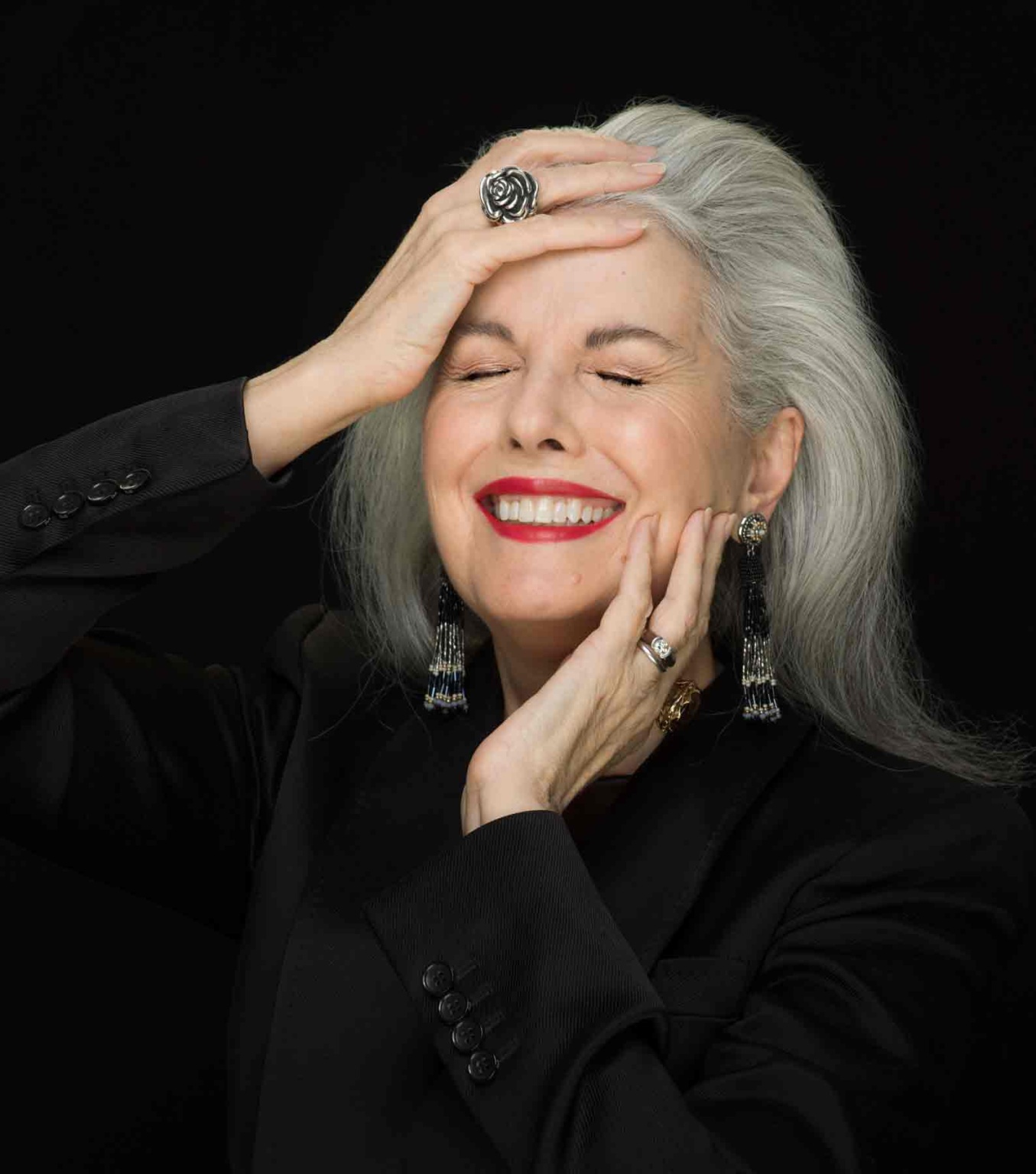
Hair often becomes finer or thinner over time, and very long hair can sometimes look sparse at the ends. But if your hair is still thick and healthy, longer styles can look absolutely beautiful.
Face shape also plays a role—long hair can sometimes visually drag the face downward, whereas shorter or lifted styles can be more flattering.
Personally, I tend to wear my hair up most of the time, which gives a lifting effect similar to shorter hair. I’ve experimented with many lengths over the years, and I’m currently enjoying it a bit longer—but I do think knowing how to style it (especially with updos) makes all the difference.
Link to Updo tutorial – https://youtube.com/shorts/jCM2TZbbfIQ
As a makeup artist, has going gray changed the way you approach your own makeup? Do certain colors or formulas work differently now against gray hair and mature skin?
Yes, absolutely.
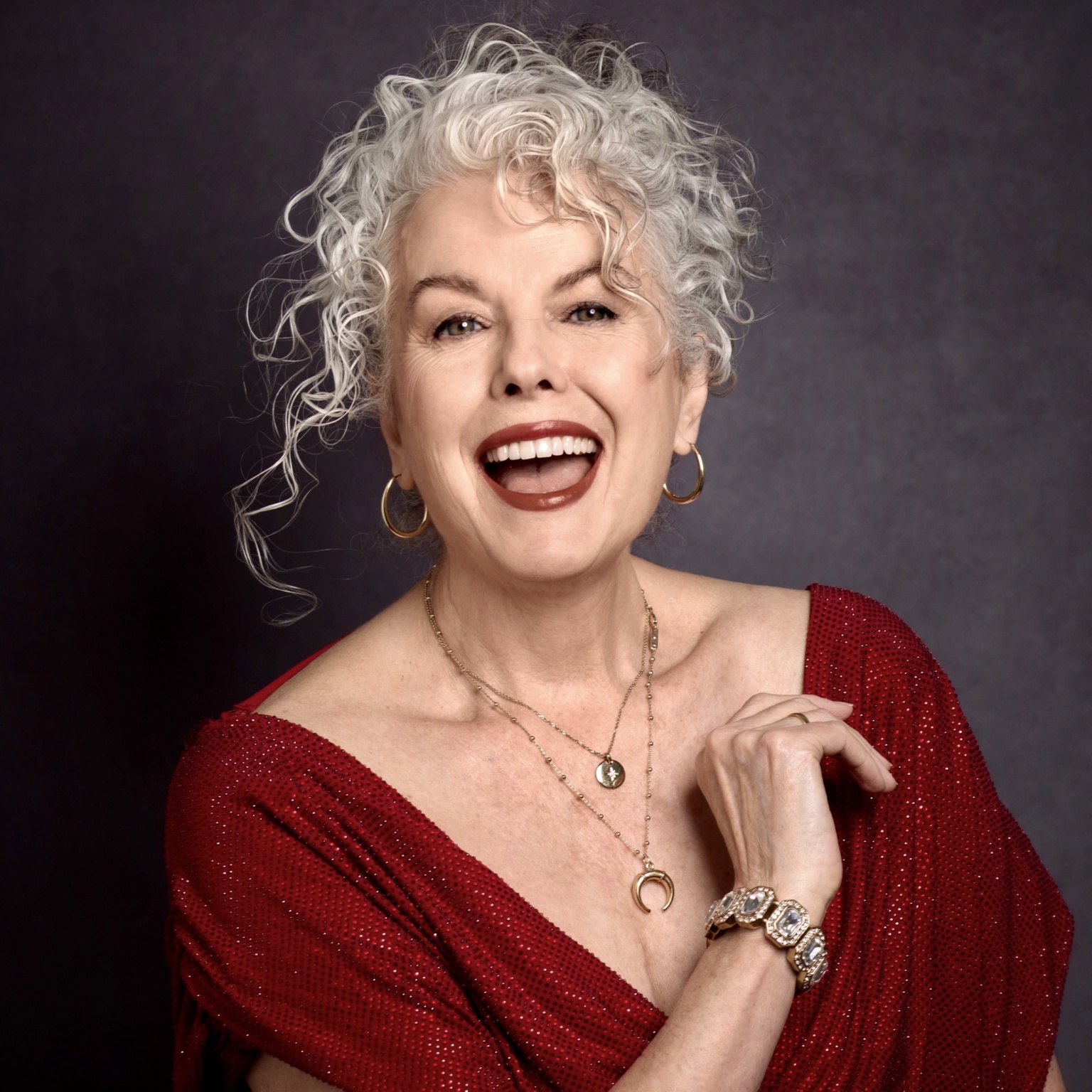
With lighter hair—especially around the face—it’s important that makeup doesn’t appear too harsh. I’ve softened my overall approach.
For example, I now tend to use dark brown or plum eyeliner instead of black, which is more flattering against mature skin and lighter hair. (Plum works particularly well with green eyes.)
I’ve also shifted from cooler-toned blushes to slightly warmer, rosier tones, which bring more life to the complexion.
One product category I’m loving right now is bronzing drops. My current favorites are Westman Atelier Sun Tone Bronzing Drops and Ciele Bronze & Protect SPF 50. I mix them with moisturizer or foundation—they give the most natural, healthy glow without looking heavy.
Shop Kerry Lou’s Favorite Products
Talking with Kerry-Lou reminded me of something I truly believe. The women who age most beautifully are the ones who stop fighting themselves and start owning their own style. Whether you’re mid-transition and hiding your roots under a baseball cap, or you’ve been rocking your silver for years and just want to care for it better, Kerry-Lou’s decades of professional experience and her own personal journey make her one of the most trustworthy voices in this space. I’d encourage you to explore her Silver Style Studio, follow her on Instagram, and watch a few of her YouTube tutorials. I guarantee you’ll feel like you’ve found a wise, stylish friend who just happens to know everything about hair and makeup for women over 50. Isn’t that exactly what we’re all looking for? As always, I’d love to hear from you in the comments. Are you embracing your silver, still on the fence, or absolutely not interested?
Follow Kerry Lou on Instagram here
Follow her on YouTube here
Follow her on Facebook here
Check out her website here
If you can’t get enough of Kerry Lou (we can’t)
Women Over 60: Makeup Techniques That Actually Work with Kerry-Lou Henson

Loved this.My hair is such a pain right now. so I’m very open to try her products. Such an informative newsletter.You gave us all the details we needed. Thanks for all your informative information.
Hi Sandra
I am definitely going to try some of her products as well!!
Thanks for this great post! I started to embrace my curls and grey during Covid and am loving the results. Kerry Lou’s advice and updo’s look really cute. I can’t wait to try some of these products too.
Hi Lynn
Kerry Lou has introduced me to some new products that I want to try as well. She is such an inspiration and so knowledgeable! I would love to have her do my makeup! I am makeup handicapped I am afraid!!
Hi Cindy,
I would love the opportunity to do your makeup – you never know, our paths may cross someday!
~Kerry-Lou
Hi Kerry-Lou
I hope so!!!
I never got compliments on my hair until I let the gray grow in. Now I get stopped all the time for compliments on my hair. Even from a few men, which is surprising. I’m lucky in that it is a very light gray, almost silvery white. I wear it shoulder length.
Hi Valeri
I never did either!! I find it interesting that many young men compliment me on it. Maybe the older men are wishing they had a 20 year old at their side ha ha!!
Hello Kerry Lou! I mentioned her when Cindy did a story about me on her blog. Kerry Lou and I were using Zoom during Covid to discuss all things hair, make up and the best colors for clothing, she being on the east coast and I on the west coast. I’m sorry that we have lost that personal connection but she was definitely someone who influenced and inspired me. It’s fun to see her again through Cindy’s blog. We women of a certain age are setting the tone, I hope, to make it alright to grow older with grace and confidence.
Hi Wren
Kerry Lou is just the best…isn’t she?
Hi Cindy. As always, you post about something that is of interest to me. I am growing out my gray and loved reading about Kerry Lou’s gray hair journey. One thing you haven’t touched on is gray blending. I would love to know your thoughts and if there is anyone in your area that does this. I am in Santa Barbara and am struggling finding someone who specializes in this process without heading south to LA. I always look forward to reading your posts! Thank you for all your hard work, time and research! You are appreciated!!!
Hi Laurie
I had a stylist in Salinas that did “gray blending” or low lights and highlights as she called it. She has since retired. Do you follow @jackmartincolorist on Instagram? He is located in Irvine and does amazing work with gray hair.
Good morning and could Kerry Lou be more gorgeous and more inspiring? I think not. Thank you for sharing her with us. I am a fan of people who embrace their age and, like you, make us feel age is just a number! You both make me wish I had beautiful gray/white hair, but because it is a very mousy light brown with a few gray hairs, I will continue to be a blonde! As always, your blog continues to be on my “favs” list!
Hi Gail
Thank you so much! Great to hear from you!
I decided to let my hair go gray about eight years ago. It was a several year process. I went from coloring my hair every three weeks as my natural color was a very dark brown. I started with highlights, that progressively took over until I had a sort of blonde color. Not my best look. Then started highlighting that blonde with platinum highlights and just let my hair grow out. It was the best decision I ever made. At 74 my hair is almost all silver now and very healthy. It did require me changing my color palette for clothes and makeup. I would love to see a future post on how to achieve natural looking updos such as the one KerryLou has in some of her pictures. About the only thing I can do is a ponytail!
Mary, I second your request for updos. I try them often but 90% of the time, they fall down soon after. I would love to know how to do that with a long bob.
Hi Gray
I bet Kerrry Lou will do a youtube video if we twist her arm!!
Cindy had this link in her article on an updo tutorial. You must have missed it.
https://youtube.com/shorts/jCM2TZbbfIQ