
Dance for Healthy Aging: Sarah-Walton Smith on Music, Movement and Joy

Let’s dance our way to better health.
One step, one tune at a time.
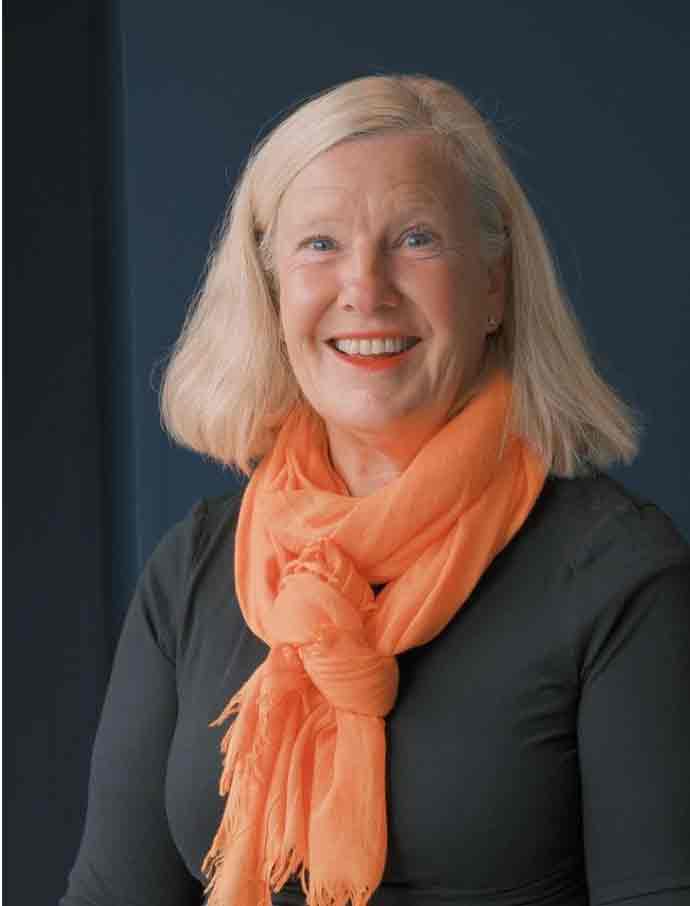
Sarah Walton-Smith’s prescription for aging well came to her on a dance floor in Havana in 1999, in the middle of a salsa, in a moment she describes as a lightning bolt. Today she is a Lifestyle Medicine Advisor, and her message is one every woman in this chapter should hear: the best exercise for healthy aging may be the one that doesn’t feel like exercise at all. Dancing challenges our balance, sharpens the brain, lifts our mood and (perhaps best of all) puts us in a room full of people. In this installment of my Wellness Series, Sarah explains what lifestyle medicine really means, what the research says about dance and depression, and why you don’t need a shred of rhythm to reap the benefits!
Introduction & Background
You describe yourself as a purpose-led Lifestyle Medicine Advisor. Can you tell us what led you down this path, and how music and dance became your specific prescription for wellness?
The moment that changed everything: Havana, Cuba, December 1999.
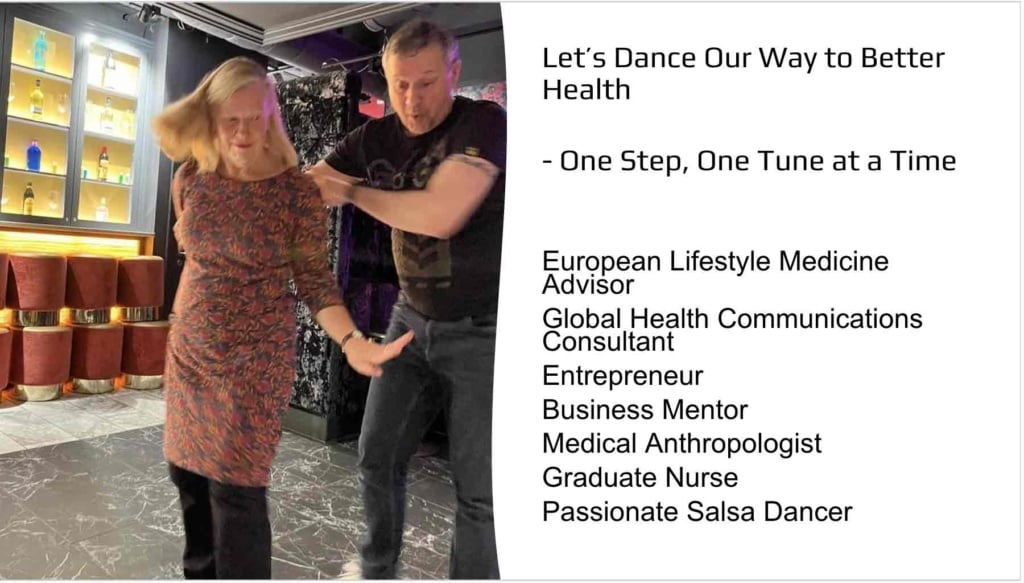
I am dancing in Café Cantante with my Cuban salsa teacher, Alexis González, when something extraordinary happens. As I surrender to the music and the rhythm, I experience an epiphany, a moment of pure euphoria. For a fleeting moment, my mind, body and soul feel completely connected. It was like a lightning bolt. At that moment, I knew that music and dance were going to become a much bigger part of my life.
Back in London, I was travelling, working full-time in global health marketing and communications, and raising a wonderful young son. My professional career was already deeply rooted in health, however, that experience in Havana gave me a new perspective: health isn’t simply about preventing disease. It’s about feeling alive. It’s about vitality, connection, joy and having the energy to fully participate in life.
I became increasingly passionate about sharing the evidence behind Lifestyle Medicine, educating people how the everyday choices we make around movement, food, sleep, stress, relationships and our environment can profoundly influence how we feel and age.
As I explored the evidence, I realised that music and dance belong in that conversation too. Not as another chore or item on our health checklist, however, as something that inspires us to move, connect and engage more fully with life.
That moment in Havana was the beginning of a journey that brought together my professional purpose and personal passion: helping people build successful businesses while creating healthier, more energised and joyful lives.
For readers who haven’t heard the term before, how do you define “lifestyle medicine,” and where does dance and music fit within that framework?
According to the European Lifestyle Medicine Organization (ELMO), “Lifestyle medicine is a branch of medicine which has as its goal to maintain optimal health and to prevent, treat and reverse chronic illness across all life stages.”
Put simply, using the power of everyday life to help prevent, manage and sometimes even reverse chronic disease. It’s an evidence-based approach to health that looks beyond prescriptions and procedures to the habits and environments that shape how we feel and how we age. It emphasizes evidence-based behavioural strategies around nutrition, sleep, stress management, social connections, sexual health, physical activity, and minimizing harmful exposures. Lifestyle medicine emphasizes patient education, motivation, and behaviour change to improve quality of life.
What I love about Lifestyle Medicine is that it shifts the question from simply, “How do we treat illness?” to “What helps us thrive?” It’s about recognising that we have more influence over our health than we sometimes realise, and that the choices we make every day can support our wellbeing. And that’s where music and dance fit beautifully. They bring together movement, connection, expression, pleasure and joy together in a way that feels natural rather than prescriptive. You’re not thinking, “I need to exercise”. You’re simply moving to music, connecting with others and having fun, while your body and brain benefit.
For me, that’s the real treasure: wellness doesn’t have to feel like work. It can feel like passion, joy and fun.
The Science & Philosophy
What is it about dance and music specifically that makes them so powerful for health as we age, physically, mentally, and emotionally?
Physical activity is one of the pillars of Lifestyle Medicine. Dance is movement disguised as pleasure. It can increase your heart rate, challenge balance and coordination, stimulate the brain, reduce stress and bring us together socially, all while we’re having fun.
Music adds another dimension. It can influence our emotions, attention, memory and motivation. Listen to a song that takes you back to a particular time in your life and suddenly you aren’t just listening, you are remembering, feeling and reconnecting.
For me, music is the invitation to feel, and dance is the response.
And that becomes particularly powerful as we age. If we find movement that we genuinely enjoy, we’re far more likely to keep doing it. Rather than thinking, “I need to exercise for 30 minutes,” I’d rather ask, “What music makes you want to move?”
When our healthy behaviours bring us joy, connection and a sense of possibility, we’re much more likely to make them part of our lives.
That’s Lifestyle Medicine to me: evidence-based health, brought to life in ways that are joyful, meaningful and sustainable.
Is there research that first got you excited about why movement paired with music is more effective than movement alone?
Increasingly, science is helping us understand why music and movement can be so powerful for our health.
As De Vivo and Lumera write in The biology of kindness: Six daily choices for health, well-being, and longevity (F. De Vivo, Trans.). Cambridge, MA: The MIT Press:
“Scientists and doctors now have strong evidence that music can improve our health. It can enhance our neuronal networks, lower blood pressure and heart rate, reduce stress hormones and inflammation, relieve pain, and help mitigate the consequences of heart attacks and inflammation.”
There’s also compelling evidence that dance is more than enjoyable, it can enhance our mental health too. A 2024 systematic review and network meta-analysis of 218 randomized controlled trials involving 14,170 people found that dance was associated with reductions in depression, with effects comparable to, and in some analyses greater than, other forms of exercise studied which included walking or jogging, yoga, strength training, tai chi/qigong.
Reference: Noetel M, Sanders T, Gallardo-Gómez D, et al. Effect of exercise for depression: systematic review and network meta-analysis of randomised controlled trials. BMJ. 2024;384: e075847. doi:10.1136/bmj-2023-075847. PubMed
For me, this reinforces what I’ve experienced personally: when movement is infused with music, joy and connection, we’re not just exercising our bodies, we’re nourishing our minds, emotions and spirits too.
How does dance support things like balance, bone density, cognitive function, or mood in ways other forms of exercise might not?
Dance is a wonderfully rich form of exercise because it asks the body and brain to work together. You’re not simply moving, you’re listening, remembering, coordinating, balancing, responding and expressing yourself, often without even realising how much is happening.
The physical benefits are important. Dance can challenge balance, coordination and strength, and weight-bearing forms of dance may support bone health. But what makes it particularly interesting as we age is the cognitive challenge. Learning steps, following rhythm, changing direction and responding to music all require attention, memory and mental flexibility.
Then there’s the emotional dimension. Music can lift our mood and evoke powerful memories, while dance gives us a way to express and release emotion. When it’s shared with others, it adds another vital ingredient: connection and belonging.
Dance can also bring us into the present moment. Instead of dwelling on worries or negative thoughts, we become absorbed in the music, the movement and the people around us, a kind of moving mindfulness.
That’s what makes dance so special to me. It isn’t just exercise for the body; it’s a whole-person experience that engages the body, brain, emotions and spirit.
Practical & Everyday Application
For someone who hasn’t danced since their wedding day (or ever!), where would you suggest they start?
Start with fun movement, not footwork.
Choose something beginner-friendly and low-pressure. Look for classes labelled absolute beginner, no experience necessary or come as you are. Salsa, line dancing, ballroom, sequence dancing or gentle dance classes can all be great places to start.
Or put on your favourite playlist at home and dance for 10 minutes. No choreography, no mirrors, no judgement, just move and feel the music. You might be surprised how quickly your body remembers what to do.
And if you are nervous, go with a friend to a class, maybe more fun together.
Most importantly, don’t worry about getting the steps right. The magic is in moving, listening, connecting and enjoying yourself. Maybe start with one session a week and increase duration or frequency as confidence and fitness improve.
My advice? Find music you love, turn up the volume and start moving. You’ve got nothing to lose, and quite a lot to gain. Just do it!
Do you need any rhythm or dance experience at all to get the benefits, or is it really about just moving to music?
Not at all. You don’t need rhythm, experience or even confidence to benefit from moving to music.
One of the joys of dance is that the benefits can begin with very simple movement. Stepping, swaying, shifting your weight or moving your arms can challenge strength, mobility and balance. Following a beat adds another layer, asking the brain to listen, anticipate and coordinate movement. Even learning a few simple steps engages memory and attention.
And music makes a difference because it can make movement feel enjoyable rather than like exercise. That enjoyment matters. We’re far more likely to keep doing something we genuinely love.
So, I make a distinction between dance as a skill and dance as movement. You need practice to become a great dancer. But you don’t need any skill to start moving and experience the potential physical, cognitive and emotional benefits.
You don’t have to know how to dance before you can start dancing. Just put on music you love and move.
What does a “dose” of this prescription look like in a normal week? Is there a frequency or amount you recommend?
As your confidence and fitness grow, you can gradually increase the frequency or duration.
There’s no perfect prescription. The best dose is the one you enjoy enough to keep doing.
Can readers get these benefits from dancing alone in their kitchen, or is there something important about doing it socially or in a class setting?
Absolutely. Dancing in your kitchen counts! You can get many of the physical and cognitive benefits simply by putting on music and moving.
However, dancing with other people adds something special: connection, motivation, shared energy and a sense of belonging. A class can also provide structure, variety and the encouragement to keep going.
So, I’d say: the kitchen gives you the movement; the dance floor gives you the community. Both matter, and the best option is the one that makes you want to keep dancing.
Aging Gracefully & Joy
So much of aging well gets framed around discipline or what we “should” do. How do you help women reframe dance and music as pleasure rather than another item on the wellness to-do list?
I think the most powerful shift is to stop presenting dance as something women ought to do for their health and start seeing it as something we may enjoy. Self-care is so important. It’s about paying attention to ourselves, what we need, what energises us and what brings us joy.
Dance fits beautifully into that. It can be both beneficial and joyful. You don’t have to earn it, optimise or turn it into another measure of how well you’re ageing. Sometimes self-care is simply putting on a song you love, closing the door, and giving yourself permission to move.
Taking care of ourselves isn’t selfish. When we have more energy, resilience and joy, we have more to give to our family, friends, work and the hobbies that we love.
What role does joy or playfulness itself play in healthy aging, in your view?
Joy and playfulness are not luxuries; they are essential ingredients of healthy ageing. They encourage us to move, connect, stay curious and remain open to new experiences. Healthy ageing isn’t just about adding years to life; it’s about adding life, joy and possibility to those years.
Have you seen dance and music change how a client feels about getting older? Not just physically, but in their outlook?
Absolutely.
Omara Portuondo is a beautiful example. She continued performing well into her 80s and 90s, showing that music and movement can be about expression, connection and joy, not proving that you’re young. Her example reinforces the idea that ageing doesn’t have to mean becoming less vibrant. You can grow older while remaining curious, creative, sensual, social and fully engaged with life.
As Dr Gladys McGarey reminds us, “The juice is our reason for living. It’s our fulfilment, our joy. It’s what happens when life is activated by love“. A beautiful reminder that ageing well is not simply about extending life, but about continuing to experience meaning, joy, purpose, connection and joy. Finding ways to keep feeling alive at every age.
Reference:
McGarey, G. (2023). The Well-Lived Life: A 102-Year-Old Doctor’s Six Secrets to Health and Happiness at Every Age. New York: Harper Wave/Simon & Schuster.
Personal & Closing
What does your own relationship with music and dance look like day-to-day? Do you have a personal ritual or favorite way to move?
Having danced for over 25 years, I still absolutely love salsa and travel to a club once or twice a week. There’s something about the music, the energy and the sheer joy of being completely in the moment that makes it feel less like exercise and more like a celebration. Dancing salsa for several hours is a great cardiovascular workout and I’m simply enjoying the music, following my lead and being present. And, of course, it’s a wonderful way to reconnect with my salsa friends and share our passion together.
If a reader tries just one thing after reading this interview, what would you want it to be?
Never stop exploring the joy of dance. Stay curious.
Put on a song you love and dance. Don’t worry about getting the steps right or whether you’re “a dancer”. Just move, have fun and notice how you feel.
Where can our readers find you or follow your work if they want to learn more?
Readers can connect with me and follow my work on LinkedIn, where I share thoughts and insights on healthy aging, lifestyle medicine, business mentoring and the power of positive lifestyle choices.
https://www.linkedin.com/in/sarahwaltonsmith
What stays with me most from this conversation is Sarah’s insistence that joy isn’t the reward we earn after the healthy stuff is done. It is the healthy stuff. We spend so much of this stage of life being told what we should be doing: more steps, more protein, more discipline. Sarah’s advice is gloriously simpler. Put on a song you love, close the door and move. Nobody is grading your footwork (least of all Scout). Whether your dance floor is a salsa club, a beginner line dancing class or your kitchen while dinner simmers, the right dose is the one you’ll keep coming back to.
You might also enjoy these wellness features as well:
The Friendship Prescription: What Dan Buettner has Taught Me About Aging Well
Susan Feldman & Phyllis Berger on Reinvention Aging & Self-Acceptance


I was born in a music dancing family. I absolutely love dancing. I listen to music from the time I get up until I go to bed and sometimes have music playing softly thru the night. I don’t have a TV…..only music for me.
What a fabulous and inspiring interview! Keep moving!
Great post! Energizing! Thank you – we need to keep moving!
I have always loved to dance. Bigtime dancer here. I have a framed piece on my gallery wall with the following quote… “If the music is good, you might as well dance.” 💃🏼
Can’t thank you enough for sharing Sarah and her thoughts on music, dance, and aging. I immediately turned off the news and put on happy music! Now to my yoga mat and a happy dog walk!
Have a great day!
This Post resonated strongly with me. I’m 58 and started taking dance classes in January of this year (after growing up with formal ballet classes 3-4x/wk and not regularly dancing for decades) and I really believe they have impacted all aspect of my life. My teacher is a very positive and energetic woman and it’s impossible not to have a good time in her presence. My spirits are lifted, I am stronger and I look forward to the classes every time! I’m going to keep dancing.