
Move Better, Age Stronger: Yoga Expert Jennifer Parker on Flexibility, Agility, and the Stretching Habits That Transform How We Age

Let’s be honest, most of us hit a certain age and start noticing things. The morning stiffness that takes a little longer to shake off. The balance that isn’t quite as steady as it used to be. The body that just doesn’t bounce back the way it once did. I’ve been there, and I know so many of you have too. That’s exactly why I was so excited to sit down with Jennifer Parker, a longtime reader of Cindy Hattersley Design, and a yoga practitioner and instructor with decades of experience helping people move better, feel better, and age with a whole lot more grace. She’s the real deal, and what she shared about flexibility, agility, and the power of consistent stretching as we age? It’s the kind of advice I wish someone had given me years ago. Let’s chat about how we need to “Move Better, Age Stronger: Yoga Expert Jennifer Parker on Flexibility, Agility, and the Stretching Habits That Transform How We Age”
This is the sixth post in my all-new Self-Care Series. Let’s chat about why is flexibility is so important as we age? Yoga veteran Jennifer Parker has the answers.
“Move Better, Age Stronger: Yoga Expert Jennifer Parker on Flexibility, Agility, and the Stretching Habits That Transform How We Age”
Jennifer – tell us a bit about yourself, and how you went from practicing to teaching yoga.
I discovered yoga when I was in my 40’s. It gave me something positive to focus on as my first marriage was ending and I was stuck and suffering in a prolonged depressed state. I had never been an athletic person and definitely didn’t think of myself as a very strong person, either physically or emotionally, but working with my body in yoga felt good and as I gained strength in my body, I also felt emotionally stronger and more balanced. Eventually I found my niche in the style of yoga taught by BKS Iyengar, which emphasizes learning the most beneficial alignment of the body in each pose and developing the ability to hold the pose and feel its effects on the body. After a few years, my teacher asked me if I would be interested in teaching under his guidance, and I started out with just one class. Several years later my teacher was working with a local cardiologist who was doing a clinical trial testing whether yoga could be an effective adjunct therapy for folks living with atrial fibrillation and he asked me to assist him. The study was published under the title “Yoga My Heart.” That was my introduction to yoga therapy, and I was immediately captivated! I completed a rigorous program of training to become certified as a yoga therapist by the International Association of Yoga Therapists. By then I was turning 60! At 62 I retired from my full-time job as a paralegal and opened my own yoga studio where I taught regular group classes and one-on-one yoga therapy clients. I closed the studio 2 years ago, but now, at age 75, I still teach classes and provide yoga therapy online or in person.
“Move Better, Age Stronger: Yoga Expert Jennifer Parker on Flexibility, Agility, and the Stretching Habits That Transform How We Age”
What do you find are the most important benefits of yoga as we age – including balance, flexibility, and strength.
People often associate yoga with flexibility, and many think it is a prerequisite for starting a yoga practice. But especially as we get older, maintaining both muscular and bone strength is primary if we wish to live independently. Without strong bones and muscles, we lose the ability to move at all: to sit and stand; to walk; to get into and out of bed, chairs and cars; to do all the tasks of daily living and the activities we enjoy. We can remain active without being very flexible or having great balance, but we cannot remain active without strength. Moreover, maintaining adequate lower body and core strength provides a foundation for working on balance and flexibility.
Any poses in which we are contracting muscles and lifting and holding body parts against the pull of gravity are strengthening. But many yoga poses fulfill more than just one function, so you can work on strength, flexibility and balance all at the same time. In a simple pose like Hunting Dog Pose, we are building muscle strength by lifting and holding one leg, the opposite arm and the head against the pull of gravity; we are building bone strength by putting stress on the bones of the supporting leg, arm and wrist; we are engaging the abdominal core muscles to support the spine; we are improving balance by removing part of our usual two-legged support system; we are building coordination by working diagonally and we are honing our ability to concentrate because we have to remember which limbs to lift when. I have recently added hand weights to my yoga practice and will probably add ankle weights too. Some folks use resistance bands in creative ways to enhance the strengthening properties of their yoga practice.
When we think of yoga, we usually think of its benefits on the body – how does it impact mental health along with memory and emotional health as well?
I actually think that flexibility and balance are more important in the mental and emotional realm than they are in the physical realm. This is where breathing and meditation practices are helpful. There are simple breathing practices that stimulate a sluggish mind and others that calm an anxious mind. Once you enliven a stuck, ruminating mind (depression) or soothe an overactive, fearful one (anxiety), and guide your mind into a more balanced state, then you can take a step back from being ruled by your depressed or anxious thoughts and begin to observe them instead. It’s like stepping out of a swiftly moving stream and watching it go by instead of being carried along by it. When you are caught up in the stream, you are at its mercy and will be taken in the direction that it is going, perhaps at your peril! But standing on the bank of the stream, you can see the water and the rocks in the streambed; you can see what’s happening on your side of the stream and what it looks like on the other side; you can look inside yourself and decide if the stream is what you really want. Now that you can see what’s going on around you and within you, you are in a better place to consider what other options might be available to you. You can get back in the water, if that seems wise, or you can go in another direction that seems more promising.
“Move Better, Age Stronger: Yoga Expert Jennifer Parker on Flexibility, Agility, and the Stretching Habits That Transform How We Age”
You currently teach private yoga lessons – tell us how you approach pain management and what exercises have you found help the most when it comes to joint pain, stiffness, and chronic mobility issues in your clients?
Pain is the signal your body sends you when it wants you to pay attention to it. Maybe you have really injured something – at least that’s the conclusion we usually jump to. But maybe you have been sitting with your back rounded and your shoulders hunched forward for longer than your body wants to tolerate and it’s telling you to get up and do something different. Maybe you are feeling an intense pull in the back of your legs when you bend forward and stretch some tissue that hasn’t been stretched in a while and it’s asking you to slow down and be gentle. Or maybe it’s chronic pain, which is even more mystifying to treat and challenging to live with. In any case, the yogi’s task is not to ignore it and hope it goes away. The task is to pay attention to your pain, to feel it and try to decipher the message that is being sent to you. If it seems to signal potential injury then, by all means, stop and attend to it immediately. If it is “get up and move” pain, or “be careful” pain or “oh – you again” pain, then you survey the options that are available to you and go in the direction that seems to be most beneficial. My pain mantra is “teach yourself to tolerate unpleasant sensations that are pointing toward a desirable outcome, but don’t practice pain!” Discerning the difference makes all the difference!
Mindfulness, certain breathing practices and gentle yoga can be very helpful in managing pain. I highly recommend that anyone who wants to use these yogic tools for pain management read Jon Kabat-Zinn’s groundbreaking book “Full Catastrophe Living.” Dr. Kabat-Zinn created his Mindfulness Based Stress Reduction program, a non-religious synthesis of Eastern meditation and yoga practices with scientific findings, to help his patients cope with stress, illness and pain.
Move Better, Age Stronger: Yoga Expert Jennifer Parker on Flexibility, Agility, and the Stretching Habits That Transform How We Age
Are there situations where you would recommend modified movements or even exercises you would completely avoid for your clients and what might those be?
Yoga therapy is all about modifying poses and practices to accommodate individual needs. Once we are in our 50’s and beyond, or whenever there are health challenges, a yoga practice needs to be less performative and more functional. We need to shift from a focus on “how well am I doing this pose?” to being attentive to “how does this pose make me feel? How is this practice enhancing my daily life?” If a pose doesn’t feel great, or if something is preventing you from doing it at all, then using one or more props or modifying how you work with it may make it accessible. Mr. Iyengar was famous for pioneering the use of props to help people gradually ease themselves into the postures he was teaching them. I have always used props in my personal practice, and I couldn’t be a yoga therapy practitioner without using them. A stretch of empty wall can help you discover what good alignment is and how it feels. It can steady you when you are feeling wobbly. When sore wrists or weak arms prevent you from practicing a plank pose on the floor, you can do it against a wall. A sturdy chair, such as a metal folding chair, can be used in any number of supportive ways, as can yoga straps, blocks and folded blankets.
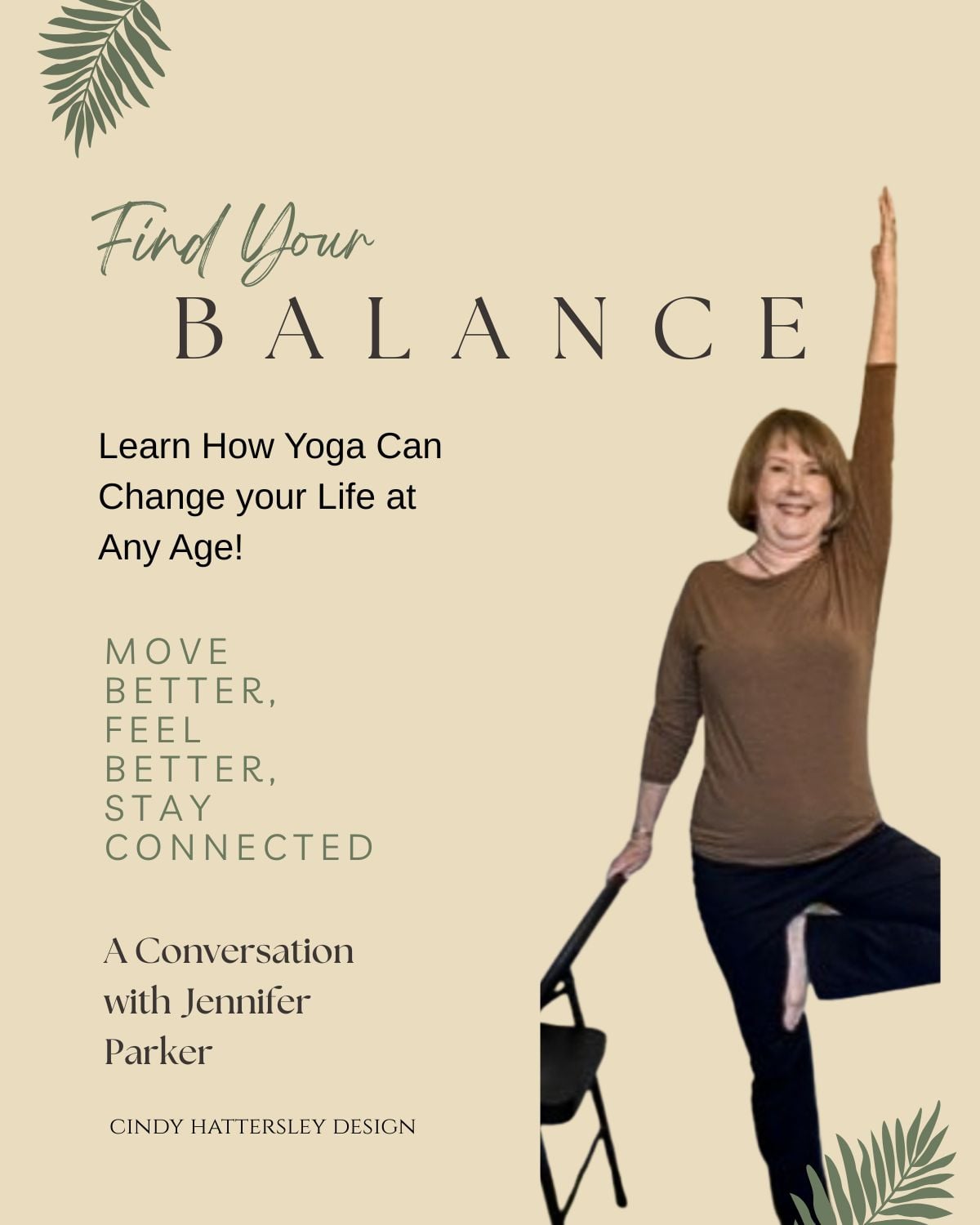
One of the great things about yoga is that it can be a lifelong practice. As you get older and life changes you, you just modify your practice to suit your new circumstances. I stopped doing headstands about 5 years ago when it became apparent to me that the risk of seriously hurting myself far outweighed the pride I felt at being able to do it. I still practice shoulderstand, but I always use supportive props, and I’m very careful now about backbends. There is one common entry level pose that I never do personally, although I do teach others how to do it, because I have learned that it adversely affects one of my joints. On the other hand, I have increased attention to my breathing practice in recent years as maintaining cardiovascular health has become more important to me. I don’t worry about letting my students know about my limitations, because I believe that allows them to acknowledge their own.
What advice would you give someone who is over 50, 60, 70, and beyond who feels nervous about starting yoga?
All you really need to bring to the practice of yoga is the intention to pay attention to whatever you are doing in the present moment, whether you are putting your body into a posture, or breathing mindfully or meditating. There are no prerequisites, nothing you have to be good at before you start – you just start from wherever you are and build from there. No worries if you can’t touch your toes – you start with the forward bend that’s available to you now and look forward to seeing if you can do a little bit more tomorrow. Can’t get down to the floor? Do some poses on a chair or even in bed. The first practice I usually teach new clients is the Joint Freeing Sequence. I often recommend doing it in bed first thing in the morning or sitting in a chair. The important thing is to give yoga a try, accepting what can’t happen today while keeping open the possibilities for tomorrow.
What should our readers look for when it comes to choosing a yoga instructor?
Kindness and empathy are the primary things a mature aspiring yogi should look for in a teacher. Safety is primary! Good training, of course, and knowledge of how to use props and devise appropriate modifications. A good teacher should invite the student to report any limitations they have and any pain or ill effects from any pose or practice and then work with her to decide next steps. The website for the International Association of Yoga Therapists (International Association of Yoga Therapists (IAYT) has a section that provides information for the general public about yoga therapy and an international listing of certified yoga therapists who have received this type of training.
Leave hot yoga, power yoga, fast vinyasa classes and extreme breathing practices to the twenty and thirty-something yogis. Look for teachers of hatha yoga, yin yoga (this style does not offer a focus on strength, but does offer flexibility, joint mobility and decompression and mindfulness) and restorative yoga. Chair yoga is always an option.
What are some positive changes your clients have seen as a result of practicing yoga?
(I asked my current clients to respond to this, so these reflect their replies. At their request, I have changed names; ages may not be exact.)
Ed, age 81, reports that he is more flexible now than he was as a young man. He credits his improved posture, ability to walk confidently and work in his garden to his yoga practice.
Manish, age 66, used his yoga practice to prepare for knee replacement surgery and credits it with facilitating his recovery. We have modified his practice to accommodate the new knee, which doesn’t bend beyond a 90-degree angle.
Both Manish and David, age 79, have had long careers that left them with chronic back pain from rounded upper backs and forward shoulder and head positions. Both men now have lovely posture and can easily manage occasional mild back pain.
Ava, age 60, reached her goal of being able to get down to and up from the floor to play with her grandchild.
Maya, age 46, was almost immobilized after two years of pain from osteoarthritis and had grown fearful that every movement would cause more pain. After less than a year of practice she has realized that movement relieves her pain, not causes it.
Laila, age 62, a longtime asana practitioner, is now learning to breathe deeper and more slowly to see if she can slow her chronically fast heart rate. (Asana practice is the practice of poses and postures, as distinct from breath and meditation practices.)
Deidre, age 74, appreciates that her yoga practice keeps her joints fluid and mobile, which pairs well with her love of cycling.
We all know that movement, but also adequate and appropriate nutrition are extremely important as we age. Do you stick to a certain diet and if so, what does that look like for you?
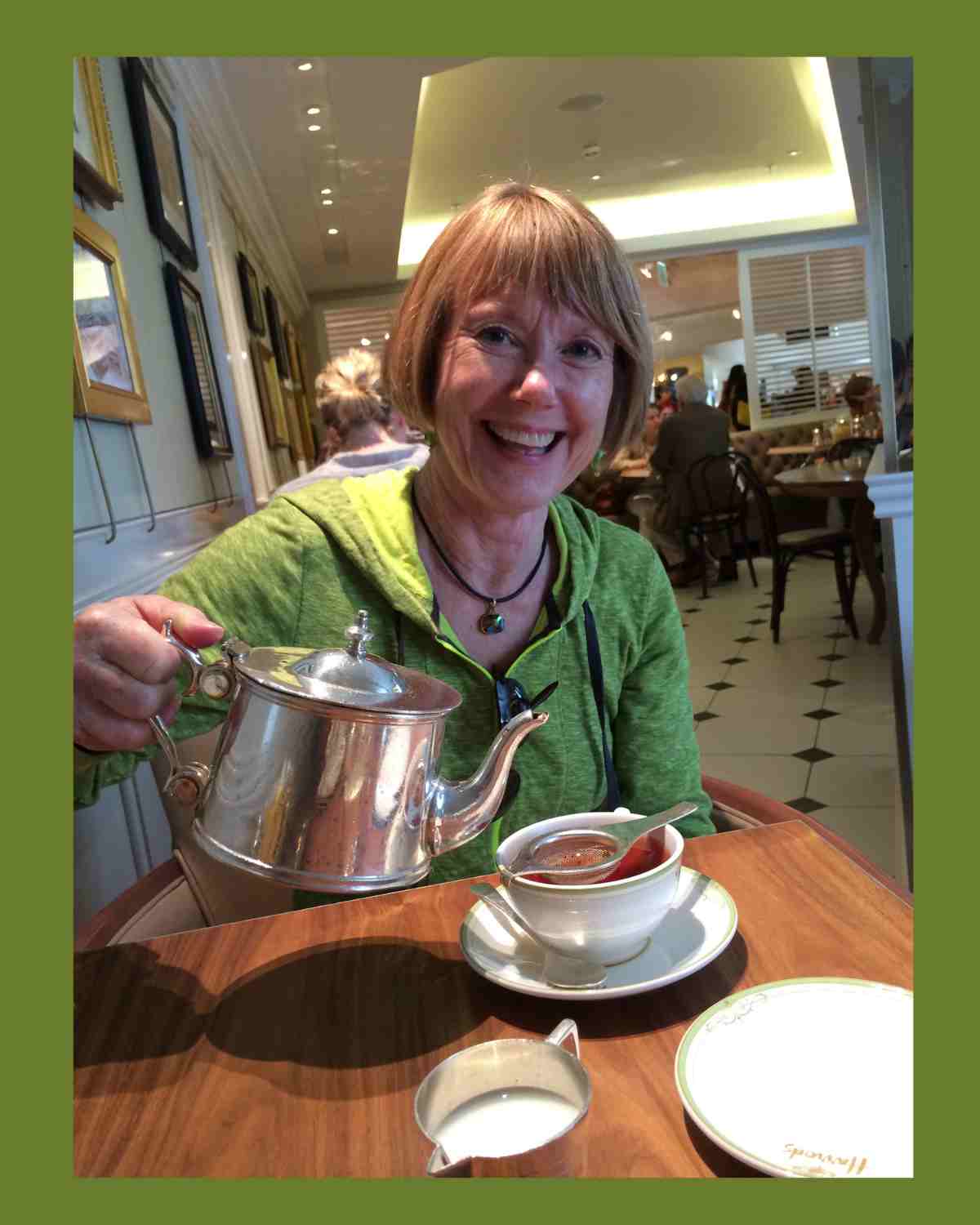
I try to bring the same mindfulness practice to eating that I advocate for practicing yoga. If I discern that a certain food doesn’t serve me well, I try to banish or minimize it. I prioritize fresh, whole foods and try to minimize packaged processed foods, caffeine, sugar and simple carbs. Like many of us aging folks, wine is not kind to me but, luckily, a glass of champagne doesn’t bother me at all! I primarily drink lots of low caffeine tea, and my friends know they can count on me to introduce them to a new tea flavor.
In addition to yoga, what other forms of exercise have you found to be beneficial and enjoyable as you have gotten older?
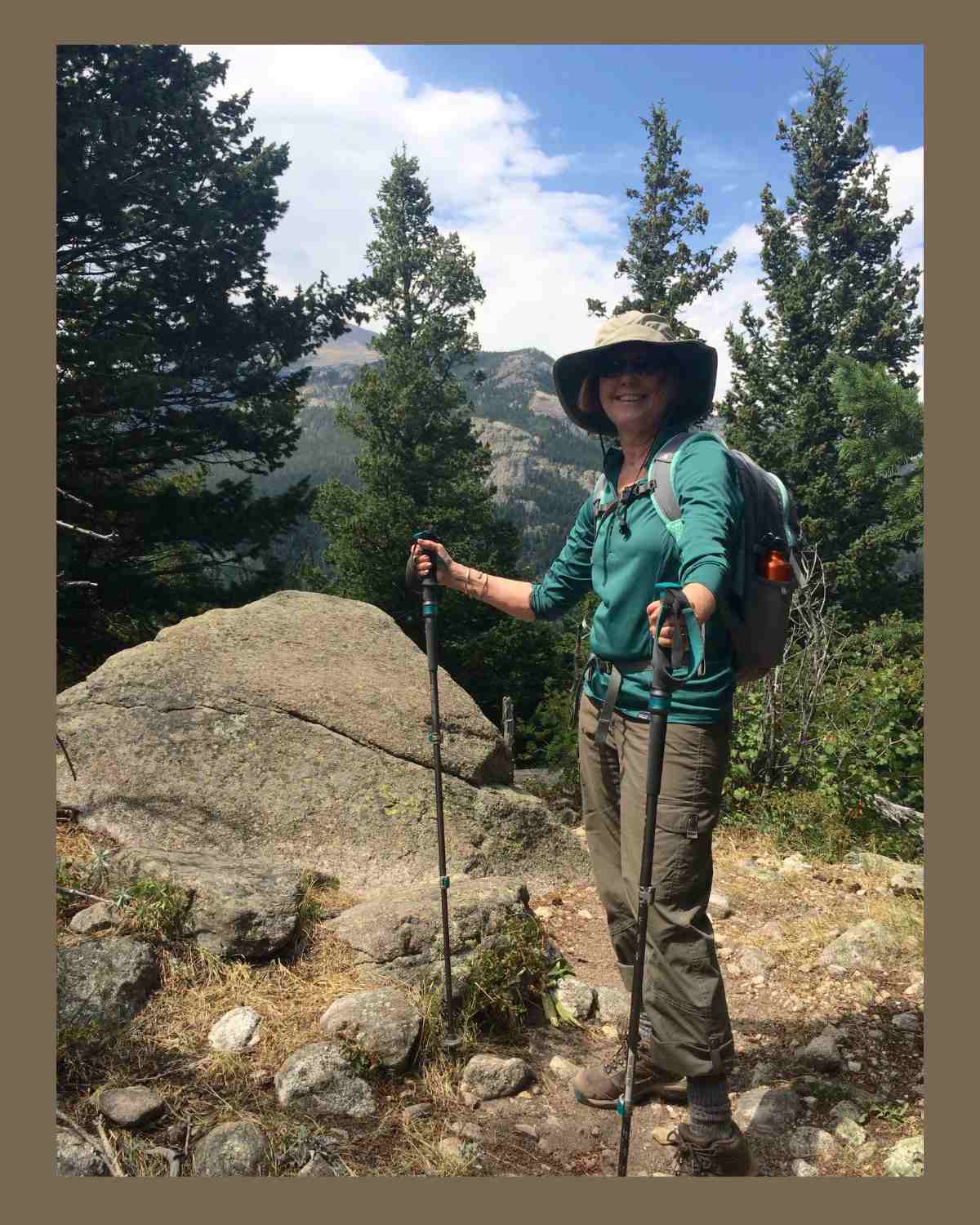
For all its many benefits, yoga doesn’t offer much in the way of cardiovascular exercise. I try to get outside to walk or use a treadmill or elliptical machine for a minimum of 30 minutes at least three times a week.
What are your top wellness tips?
Keep moving, stay connected to others, know yourself!
Jennifer’s insights are the kind that stick with you long after the conversation ends. What I loved most is how she reminded us that aging well isn’t about fighting your body or pushing through pain. It’s about showing up for yourself consistently, moving with intention, and giving your body the flexibility it deserves at every stage of life. Whether you’re brand new to yoga and stretching or you’ve been practicing it for years, there is something in what Jennifer shared for everyone. I walked away from this conversation genuinely inspired to be more mindful about how I move . I’d love to hear from you in the comments. Has yoga, stretching, or simply moving more changed how you feel as you’ve gotten older? Let’s keep this conversation going. This is exactly the kind of topic we should all be talking about more.
I hope you enjoyed “Move Better, Age Stronger: Yoga Expert Jennifer Parker on Flexibility, Agility, and the Stretching Habits That Transform How We Age”.If you would like to catch up on any posts you may have missed in our self-care series, you can find them here.




Cindy what a great post! I need to incorporate more yoga in m,y life. I do tennis, but still need more strength and stretching. I agree Yoga with Adriene is very good. My dr always says, do yoga and you won’t get injured. I think it is very true. I love her tips. She’s such an inspiration! x
Hi Kim
Isn’t she great? I need to take her advice as well!!
I’m 81 and have RA as well as two other chronic pain disabilities. But movement is essential to life. I was hyper flexible most of my life and loved to ski, hike and we did a lot of long distance bicycling until my balance issues increased and for safety reasons we had to give all of those things up. But I still do my share of housework, I stretch and bend. I lift laundry baskets and water jugs and I walk with my husband and little dog as much as I can. I feel better moving than sitting still. I do love reading and learning new things. I’m a good researcher and love my iPad. I’m always looking something up. I love learning about people and read biographies.
Hi Sydney
It sounds like you are doing everything right! Go girl!!
In the article about yoga you mentioned a study for people with AFIB. I am 74 and recently was diagnosed with AFIB that is not being controlled with medication. What kind of yoga were you referring to,please? I live in a small town so I’m thinking I may have to find a practitioner online. Thanks for the very informative article.
Hi Raye Linn
Maybe Jennifer will pipe in on this one. I am not an expert.
I always enjoy your posts and these kinds especially. I’m 69 and for quite some time I’ve done a stretching routine (based on yoga) in the mornings after my morning shower. I find if I skip too many days of doing this I end up with pains, kinks, etc. I also follow yoga classes online that I will do later in the morning, the afternoon, or evening – Yoga with Kassandra and Yoga with Joelle, both found on YouTube, are particular favorites as they have many short (10 – 15 min) classes that are very helpful.
Thank you Jeannine for sharing! I need to check those two out! I am so glad you enjoyed this post.
This is such a wonderful concept. I had to give up Pilates and yoga after having two total knee replacements several years ago which were attributed to Navy PT constant running programs; instructors were concerned about my knees but offered no alternatives. The studio sadly closed permanently during COVID. Prior to the surgeries I had been attending that Pilates studio twice a week and then later to another close place for mat Pilates and yoga three times a week run by a friend. ..closed also now. I do walk, garden and do all my own housework but the chair idea seems a good plan. Thank you, Donnie
Hi Donnie
I have heard that so often that so many studios closed permanently during Covid. I haven’t been doing either but need to get back to it!!
So love this interview and agree with her completely. I’ve been doing yoga for almost 50 years now
(I just turned 70), and taught for over 20 years. Iyengar yoga was my specialty as well. Can’t imagine my
life without it. It’s kept me in great shape physically, mentally and spiritually, and it can be tailored to
fit anyone’s needs.
Thanks Gayle for weighing in. I am so glad you enjoyed the post!!
I absolutely changed my life through yoga. I found a teacher in Kona who had been with a professional dance company. Our classes were small so there was a lot of individual attention to each of us. She corrected how I stand (my feet were turned out) which has stopped a problem I had of throwing my back out often. It would go into spasm and be painful and debilitating which that no longer happens. I think of her often with gratitude. If you would like to do a practice at home, I recommend Yoga with Adriene. She offers instruction to all levels and it’s free.
Hi Wren
Thanks for sharing. I have heard several say they like Adriene!!
Hey Wren! I love Adriene. She is so calming and always there for me, wherever I go on my laptop!
Hi Gray!!
I need to get to know Adriene!!
I loved this interview! Jennifer’s description of Iyenger Yoga matched my own experience with a wonderful studio in Boulder. It sounds as if Jennifer has also had a profound impact on her students.
I was experiencing debilitating chronic back pain, and the studio offered a back care class that was featured in the local newspaper. I had done yoga at other studios, but thought I’d give the class a try.
Using all of the props, being thoughtful about the alignment of each asana, working more on posture, gentle stretching, and balancing movement on each side of my body gave me such relief ! I am hyper flexible, so it was great to pull back from that for a change. One of my favorite poses now is Chair Dog! Instead of going to the floor in Downward Facing Dog, I fold out my metal chair, brace the back of it on a wall, and do a long luxurious asana with my hands on the seat of the chair. For more angles, rise up and down on your toes.
I’ve also done a lot of work on addressing my tendency for chronic pain. I’ve learned so much by using an app called Curable. I definitely hold a lot of tension in my muscles when I am stressed! There is such a mind body connection for many people.
Iyenger Yoga, and Curable really gave me the tools to get my life back!
Hi Lisa
I love hearing all of your experiences. Thank you so much for sharing.
Wonderful post Cindy thank you to you and Jennifer for this interview. I practised power yoga for years and found it so beneficial, and now I do a online class more suited to my 62 year old body.Love it!
Hi Francesca
Ha ha!! What online class do you like?
I would be interested in online classes, too!
Yoga is for every age. I’m 84 and my instructor Janice is 90 and incredibly flexible. She leads a part chair, part standing class for (mostly) seniors. I want to be like Janice when I grow up!
Hey Karlie how are you? You are the most amazing 84 year old I know!! I wish I were closer I would join you!!
I would love to know how to access Jennifer’s online yoga classes. I took Iyengar based yoga classes for 15 years until my teacher took a different career direction. I don’t believe there is another Iyengar teacher in my area. I still practice yoga, mainly before bed using the alignment techniques I learned in class. It would be nice to take some teacher lead classes to keep me on track and updated, motivated etc. Please advise if online classes are available. I live in central California.
Hi GMarie
I will ask Jennifer to chime in here!!