
Harvest Renaissance Salad with Roasted Pork, Butternut Squash, Figs, and Olives

Today I am joining my pal Elizabeth for our Seasonal Table Series. On paper, this salad shouldn’t work. Raw butternut squash? Olives with dried figs? Currants and red cabbage in the same bowl? It reads like someone cleaned out the pantry and hoped for the best.
And yet it’s one of my favorite things to serve this time of year. I call it the unexpected Harvest Renaissance Salad because it takes a collection of ingredients that have no business being together and turns them into something that feels entirely intentional. (I’ve always believed the same thing about decorating. The most memorable rooms mix things you’d never expect to see side by side.)
This salad holds a special place in my heart for another reason. It was a favorite of my dear friend Sharon, one of the most fabulous cooks I have ever known. Sharon did everything well, but her desserts were legendary. She baked my daughter Jenna’s birthday cake every single year, and if Sharon happened to be out of town, it was a very sad birthday for Jenna. She is no longer with us, and I can’t make this salad without thinking of her. Sharing it with you feels like the best way I know to keep a little of her at the table.
Add some sliced roasted or grilled pork and you have a supper salad substantial enough to satisfy even Steve.
Why This Unlikely Mix Works
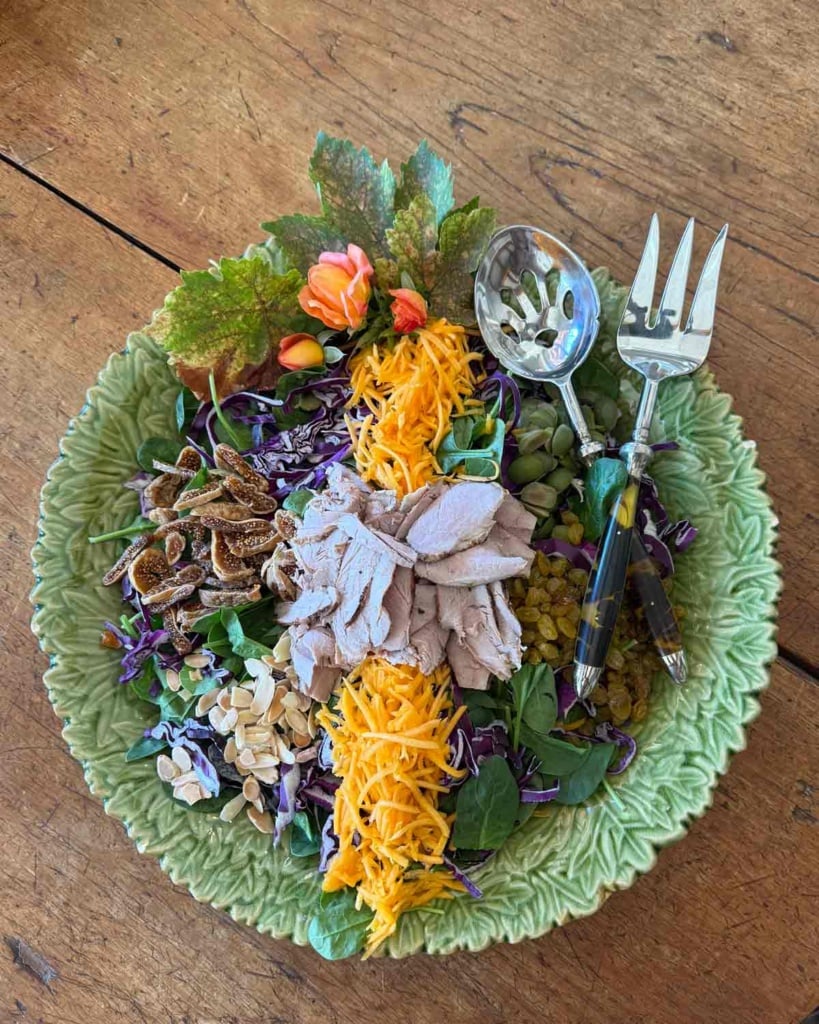
The magic is in the balance. Buttery Castelvetrano olives bring salt and brine. Dried figs and currants bring deep, jammy sweetness. Toasted almonds add crunch and a little richness. Shredded raw butternut squash, which most people have never tried uncooked, turns out to be sweet, crispish, and almost carrot-like. Red cabbage adds snap and that gorgeous jewel-toned color, and baby spinach softens everything underneath.
Then the pork comes in warm and savory, and suddenly the whole thing makes sense. Sweet, salty, crunchy, tender. It’s a bit of a Mediterranean pantry on a plate, and it’s every bit as beautiful as it is delicious. I added the seasonal butternut squash to Sharon’s original recipe, and the grilled pork to make it a main dish salad.
Harvest Renaissance Salad
Ingredients
- For the pork
- 1 pork tenderloin about 1¼ pounds
- 2 tablespoons olive oil
- 1 teaspoon smoked paprika
- 2 cloves garlic minced
- Zest of 1 orange
- 1 teaspoon kosher salt
- ½ teaspoon black pepper
- For the salad
- 5 ounces baby spinach
- 2 cups thinly shredded red cabbage
- 2 cups shredded butternut squash from the neck of a small squash, peeled
- ½ cup Castelvetrano olives pitted and halved
- 6 to 8 dried figs stemmed and quartered
- ¼ cup dried currants
- ½ cup almonds toasted and roughly chopped
- For the white wine vinaigrette
- 3 tablespoons white wine vinegar
- 1 teaspoon Dijon mustard
- 1 teaspoon honey
- 1 small shallot minced
- ⅓ cup good olive oil
- Salt and pepper to taste
Instructions
- How to Make It
- Season the pork. Mix the olive oil, smoked paprika, garlic, orange zest, salt, and pepper, and rub it all over the tenderloin. Let it sit for 30 minutes at room temperature, or refrigerate it for up to a day.
- Roast the pork. Heat the oven to 425°F. Sear the tenderloin in an ovenproof skillet over medium high heat until browned on all sides, about 5 minutes. Transfer to the oven and roast for 15 to 20 minutes, until it reaches 145°F inside. Let it rest for 10 minutes before slicing.
- Make the vinaigrette and plump the fruit. Whisk the vinegar, Dijon, honey, and shallot together, then slowly whisk in the olive oil and season to taste. Put the figs and currants in a small bowl and spoon a couple of tablespoons of the vinaigrette over them. Let them soak for 10 minutes. This softens the dried fruit and seasons it from the inside out.
- Shred the squash. Peel the neck of the butternut squash (save the bulb end for roasting another night) and shred it on the large holes of a box grater or with the shredding disc of a food processor.
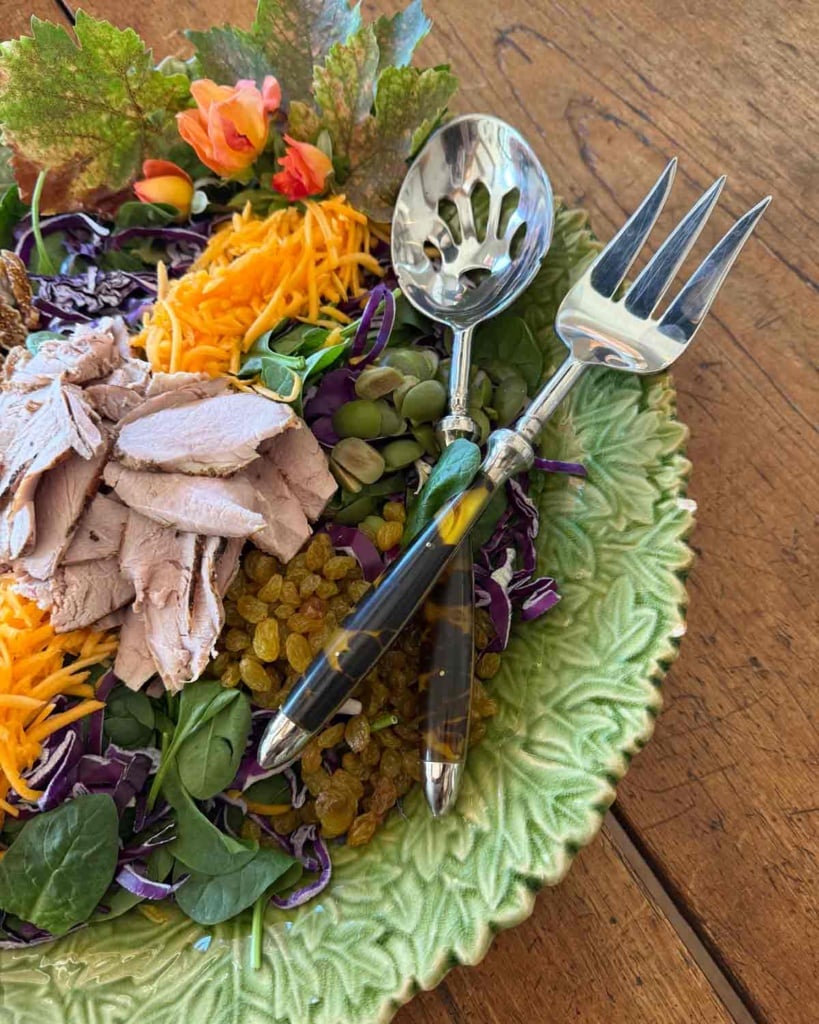
- Assemble. Toss the spinach, cabbage, and squash with a few spoonfuls of vinaigrette and spread across a large platter. Scatter the figs, currants, and olives over the top, arrange the sliced pork down the center, and finish with the toasted almonds and a final drizzle of dressing.
Ingredients
Serves 4 as a main course
For the pork
- 1 pork tenderloin (about 1¼ pounds)
- 2 tablespoons olive oil
- 1 teaspoon smoked paprika
- 2 cloves garlic, minced
- Zest of 1 orange
- 1 teaspoon kosher salt
- ½ teaspoon black pepper
For the salad
- 5 ounces baby spinach
- 2 cups thinly shredded red cabbage
- 2 cups shredded butternut squash (from the neck of a small squash, peeled)
- ½ cup Castelvetrano olives, pitted and halved
- 6 to 8 dried figs, stemmed and quartered
- ¼ cup dried currants
- ½ cup almonds, toasted and roughly chopped
For the white wine vinaigrette
- 3 tablespoons white wine vinegar
- 1 teaspoon Dijon mustard
- 1 teaspoon honey
- 1 small shallot, minced
- ⅓ cup good olive oil
- Salt and pepper to taste
How to Make It
- Season the pork. Mix the olive oil, smoked paprika, garlic, orange zest, salt, and pepper, and rub it all over the tenderloin. Let it sit for 30 minutes at room temperature, or refrigerate it for up to a day.
- Roast the pork. Heat the oven to 425°F. Sear the tenderloin in an ovenproof skillet over medium high heat until browned on all sides, about 5 minutes. Transfer to the oven and roast for 15 to 20 minutes, until it reaches 145°F inside. Let it rest for 10 minutes before slicing.
- Make the vinaigrette and plump the fruit. Whisk the vinegar, Dijon, honey, and shallot together, then slowly whisk in the olive oil and season to taste. Put the figs and currants in a small bowl and spoon a couple of tablespoons of the vinaigrette over them. Let them soak for 10 minutes. This softens the dried fruit and seasons it from the inside out.
- Shred the squash. Peel the neck of the butternut squash (save the bulb end for roasting another night) and shred it on the large holes of a box grater or with the shredding disc of a food processor.
- Assemble. Toss the spinach, cabbage, and squash with a few spoonfuls of vinaigrette and spread across a large platter. Scatter the figs, currants, and olives over the top, arrange the sliced pork down the center, and finish with the toasted almonds and a final drizzle of dressing.
Make-Ahead Tips
Nearly everything here can be prepped in advance. The cabbage and squash can be shredded a day ahead and stored separately in the fridge. The vinaigrette keeps for several days, and the almonds can be toasted whenever you have a spare moment. Unlike more delicate salads, this one holds up beautifully, so leftovers make a wonderful lunch the next day.
Wait to add the almonds until just before serving so they stay crunchy.
What to Pour
With olives, figs, and smoked paprika in the mix, this salad leans Spanish, so I’d reach for a Paso Robles Grenache or Tempranillo. Both have enough bright fruit to play with the figs and enough backbone for the pork. If you’d rather have white, a dry Rosé or a crisp Albariño is lovely here too.
Favorite Salad Bowls, Platters & Servers
Serving It Up
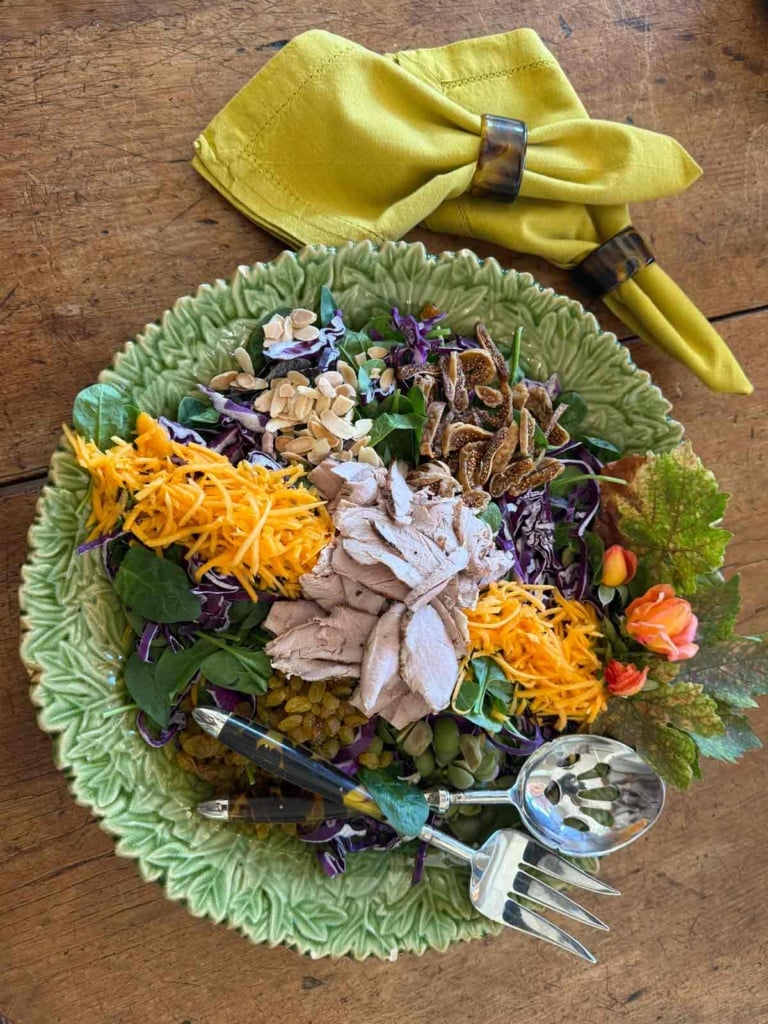
The colors on this platter do all the decorating for you: deep purple cabbage, bright orange squash, the pale green olives, and the dark figs. I like to serve it on a large white platter so nothing competes, with a loaf of crusty bread alongside.
I think that’s what I love most about this salad. It’s a reminder that the most interesting combinations are often the ones we’d never think to try. That applies to rooms, to wardrobes, and, apparently, to what’s in the salad bowl. At this point in life, I’m all for a little unexpected.
This one’s for you, Sharon.
You might enjoy my recent seasonal table post The Only Watermelon Peach Salad Recipe you Need here , or the Ultimate Fall Harvest Salad here. Now let’s pop over and visit Elizabeth to see what she is sharing for our seasonal table series.






Cindy, this salad looks amazing! I would never have thought to combine these ingredients togather. Sharon lives on in this salad, the cake and your memories.
You have my curiosity peaked, what kind of cake did Sharon make for Jenna? And do you have the recipe?
Have a wonderful day friend and thank you for doing this series!
Sounds fabulous! I will attempt this! How many does it serve?
Hi Jeanne
4-6. You can replace the pork with a rotisserie chicken to make it even simpler. You can also replace the squash with pom seeds. Believe it or not the original recipe had chopped pickles in it as well! I have not been brave enough to try that!
Oh thank you! I may make this for my dinner club which would be 8 people. I think doubling the recipe would be easy and leftovers are always welcome. Thank you so much for the ideas too…..hmmmmm on the pickles😂. I’ll let you know how it turns out. Thank you Cindy!
Hi Jeanne
I know…I couldn’t ever give the pickles a try but Sharon did and it was fabulous!!